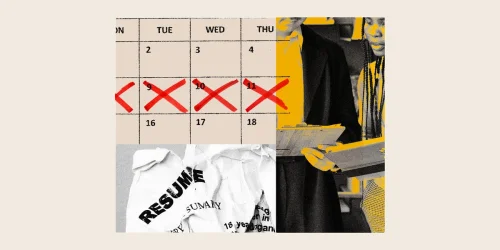
The traditional CV is losing its power in the job market, replaced by a new era of "show your work" hiring where live skills demonstrations and work trials are becoming standard. This shift is driven by the rise of generative AI, which has forced employers to verify candidates' real abilities and assess their aptitude for using new technologies effectively. Companies are prioritising proven results and adaptability over formal degrees and past job titles.
According to a 2025 survey by the National Association of Colleges and Employers, 70% of employers now use skills-based hiring, up from 65% in 2024. Furthermore, an analysis by the Brookings Institution shows job postings requiring AI skills have quadrupled, from roughly 50,000 in March 2024 to nearly 200,000 by late 2025.
The New Interview: From Conversation to Simulation
Startups like Foxglove and Rounds are at the forefront of this change, integrating multi-day work trials and AI-powered simulations into their hiring for all roles. Ellis Neder, Head of Design at robotics platform Foxglove, states the purpose is dual: "We want them to see what it’s like to really work with us." Candidates are not only allowed but encouraged to use AI tools during these assessments.
Fardeen Khimani, CEO of Rounds, which provides work simulators for roles from software engineering to social media marketing, confirms the trend: "Every enterprise wants to build AI native teams, and consequently, they have to change their hiring process to test for how well people work with AI." His company uses an AI agent named Sophia to conduct interviews that include technical simulations.
Beyond Tech: A Cross-Industry Shift
This movement extends far beyond Silicon Valley. Michelle Volberg, founder of recruiting software firm Twill, observes live testing components in finance, where candidates decipher spreadsheets, and across virtually every function. "Every single function you can think of, there is some sort of live component to it," she says.
The demand is also changing the profile of desirable candidates. Employers are increasingly valuing traits like adaptability, creativity, and a proven ability to deliver results under pressure. Davide Grieco, Head of Growth at software company Clay, hired based on personality traits like obsession and multitasking ability, selecting a top NCAA artistic swimmer and others with unconventional backgrounds over traditional marketing experience. "Knowing how to do something today doesn’t mean that you know how to do something in six months," Grieco explains.
Productivity Pressures and the Skills Imperative
The corporate drive for efficiency is intensifying the focus on skills. As companies like Meta report soaring revenue per employee—now over $2.5 million per worker—following layoffs and AI adoption, the pressure to hire highly productive staff is acute. Big Tech firms are now tracking AI usage and incorporating AI competency into formal performance reviews.
For smaller companies, the stakes of each hire are even higher. Peter Grafe, co-founder of AI marketing platform BlueAlpha, uses paid work trials to assess how candidates think and use AI tools. "Everyone can code something within 48 hours," Grafe says. "But what we want to understand is... are you using AI tools to make yourself 10X faster?"
The Future of Hiring and Employment
While skills-based hiring can democratise opportunity, it presents challenges. "It opens the door for a lot of people that may not have opportunities," says Rick Smith, a professor at Johns Hopkins University. "It then creates a challenge for employers with, OK, how do you measure these skills and competencies?"
Experts note the current employer-friendly market allows companies to impose these new demands. Moe Hutt of recruitment agency HireClix says the "knee-jerk reaction" to AI-generated applications is often to administer a test. However, the fundamental shift towards demonstrating, not just claiming, competency is likely to endure, permanently altering the path to employment and advancement.