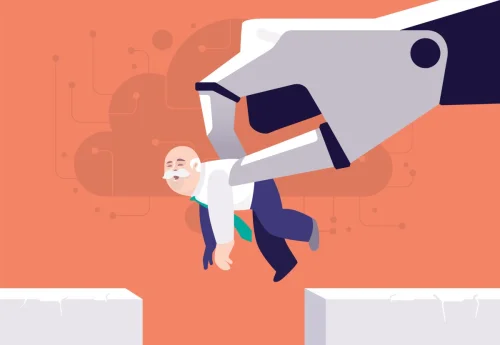
The traditional software-as-a-service (SaaS) business model, long celebrated for its predictable revenue, is facing an existential threat from the rapid advancement of artificial intelligence. A market sell-off in early February wiped nearly $1 trillion from the value of software and services stocks, driven by fears that AI tools are making it cheaper and easier for companies to build their own solutions rather than buy from established vendors.
This seismic shift, dubbed the "SaaSpocalypse" by industry analysts, represents a fundamental challenge to how software companies are valued and operate. The core issue lies in the SaaS pricing model, which charges customers per employee seat. As AI agents capable of performing complex tasks replace human teams, that revenue foundation begins to crumble.
The Build vs. Buy Tipping Point
The paradigm shift became starkly clear to investors like Lex Zhao of One Way Ventures when a founder in his portfolio announced he was replacing his entire customer service team with Claude Code, an autonomous AI coding agent. “The barriers to entry for creating software are so low now thanks to coding agents, that the build versus buy decision is shifting toward build in so many cases,” Zhao told TechCrunch.
This sentiment is echoed across the venture capital landscape. Abdul Abdirahman, an investor at F-Prime Capital, noted that SaaS has been prized for its "highly predictable recurring revenue, immense scalability, and 70-90% gross margins." However, he warned that when a handful of AI agents can perform the work of many employees, "that per-seat model starts to break down."
The trend emerged publicly in late 2024 when financial services firm Klarna announced it had replaced Salesforce's flagship customer relationship management (CRM) product with its own in-house AI system. This move demonstrated that large enterprises now possess a powerful negotiation tool: the credible threat to build a custom alternative if SaaS vendors do not offer favourable terms.
Public Markets in Turmoil
The realisation that Klarna's strategy is replicable has spooked public markets. Stock prices for SaaS giants like Salesforce and Workday have been sliding. The sell-off, described by one analyst as "FOBO investing" – fear of becoming obsolete – saw further billions wiped from market valuations throughout February.
“This may be the first time in history that the terminal value of software is being fundamentally questioned, materially reshaping how SaaS companies are underwritten going forward,” Abdirahman stated. The uncertainty is palpable; public market investors price SaaS companies based on estimated future revenue, but there is no certainty about how widely these products will be used in one to five years.
This volatility is vividly illustrated by market reactions to product launches from AI leaders. When Anthropic released Claude Code for cybersecurity, related stocks fell. The launch of legal tools in its Claude Cowork AI platform prompted a drop in the iShares Expanded Tech-Software Sector ETF, which includes companies like LegalZoom and RELX.
The Rise of AI-Native Challengers
Compounding the problem for incumbent SaaS vendors is the breakneck pace of AI development. New tools like Claude Code and OpenAI’s Codex can replicate not only core SaaS functions but also the lucrative add-on features vendors rely on for growth. A wave of AI-native startups is emerging, having "completely redefined what it means to be a software company," according to investors.
“Software is now easier and cheaper to build, meaning it’s easier to replicate,” said Yoni Rechtman, a partner at Slow Ventures. This is advantageous for new entrants but poses a severe threat to established players with legacy technology stacks built over decades.
The market is now experimenting with new pricing models to replace the per-seat standard. Some AI companies use a consumption-based model, charging customers for tokens used. Others, like Sierra—the AI startup founded by former Salesforce CEO Bret Taylor—are pioneering "outcome-based pricing," where fees are tied to the AI's performance. Sierra reportedly reached $100 million in annual recurring revenue in under two years using this approach.
Long-Term Uncertainty and a Chilled IPO Market
The anxiety extends beyond public markets. A recent Crunchbase report indicates that no venture-backed SaaS companies are expected to file for initial public offerings (IPOs) in the near term. Aaron Holiday, managing partner at 645 Ventures, suggested that large private SaaS companies like Canva and Rippling face pressure due to the "persnickety IPO window, high expectations driven by AI advancements, and the unsteady stock price of already public SaaS companies."
Some mid-size private SaaS firms are even struggling to raise extension rounds over the same fears plaguing public investors. “Nobody wants to be subjected to the volatility of public markets when sentiment can send companies into downward tailspins,” Rechtman said, predicting such companies will remain private longer.
Meanwhile, the financial community awaits the first IPOs from pure-play AI companies like OpenAI and Anthropic, which are rumoured to be considering public listings later this year. Their financial disclosures will provide the first concrete data on the viability of post-SaaS business models.
A Hybrid Future Emerges
Despite the turmoil, many investors believe reports of SaaS's death are exaggerated. “This isn’t the death of SaaS,” Holiday asserted. “Rather, it’s the beginning of an old snake shedding its skin.” He predicts a hybrid future where enterprises will still require software for critical functions like compliance, audit trails, and durable workflow management.
“Durable shareholder value isn’t built on hype,” Holiday concluded. “It’s built on fundamentals, retention, margins, real budgets, and defensibility.” Abdirahman framed the current situation as "simultaneously a real structural shift and potentially a market overreaction," noting that investors often "sell first and ask questions later." The ultimate outcome will likely weave the old with the new, as the industry navigates its most significant disruption since cloud computing itself displaced on-premises software.