Widespread cartel-related violence erupted across the Mexican state of Jalisco this week, leading to images of burning cars and buildings, forced business closures, and cities grinding to a halt. Flights into and out of the major hubs of Puerto Vallarta and Guadalajara were canceled, with authorities instructing residents to shelter in place and tourists entering lockdown.
The incidents have sparked international concern and a personal reckoning for the many foreign residents and frequent visitors who call the region home. For years, destinations like Puerto Vallarta have been perceived by many Americans as a safe haven within Mexico, a perception now challenged by dramatic footage of urban disruption.
Personal Connections Tested by Violence
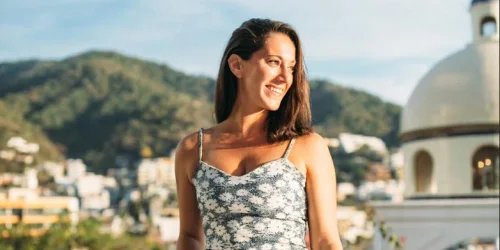
For long-term residents like travel writer Megan Spurrell, who has used Puerto Vallarta as a home base for five years, the violence felt intensely personal. Watching events unfold from Seattle, she received a stream of panicked messages and video footage from friends on the ground. "Fear sounds different when it comes from people you love," she noted, reflecting on voice notes describing a burning car just blocks from her former address.
Spurrell's relationship with the Pacific coast city spans 13 years, evolving from a reporting assignment to a full-time residence for much of 2024 and 2025. "When you spend that much time in a place, it stops feeling like an escape and becomes the backdrop of real life," she wrote, describing the routines, familiar faces, and sense of community developed over time.
Navigating the Perception of Risk
The events have ignited a familiar debate about safety and travel to Mexico. Spurrell argues that travel decisions are "fueled by emotion, personal tolerance for uncertainty, and individual experience" rather than data alone. Reactions typically split into categories: some will avoid Mexico indefinitely, others will adopt a wait-and-see approach, and a portion, like Spurrell, will feel compelled to return to their communities.
"They're traumatic precisely because they are disruptions, not constants," she wrote of such violent episodes. She emphasises that while cartel violence in Mexico is "real" and "serious," it is largely confined to specific areas and does not represent the daily reality across the vast, regionally complex country.
A Shifting Understanding of Safety
The situation highlights a "perception gap" in how Americans often view risk abroad versus at home, Spurrell suggests. The United States has developed its own familiarity with public violence, including mass shootings and random attacks. "There is no longer a clean psychological divide between 'safe at home' and 'dangerous abroad,'" she contends. "We are, increasingly, navigating variations of the same reality."
This lived experience in Puerto Vallarta has grounded her understanding of the city beyond episodic headlines. While acknowledging the seriousness of the Jalisco violence, it has not altered her fundamental relationship with the place. "Watching the videos didn't make me want to run further from Vallarta. If anything, it made me wish I were there with the community I love," she stated.
Looking Ahead
Spurrell plans to return to Mexico in early March, travelling to Puerto Escondido in Oaxaca—nearly 1,000 miles from the recent unrest. She expressed no hesitation about the trip and stated that, logistically permitting, she would return to Puerto Vallarta immediately. For her, the city represents "nearly 13 years of memories, friendships, routines, and a sense of home."
Her final reflection underscores a central theme: "Like any place anywhere, Puerto Vallarta and Mexico are larger than their worst moments. Like any place you love, those moments do not erase the steadier, more enduring reality of everyday life that surrounds them."