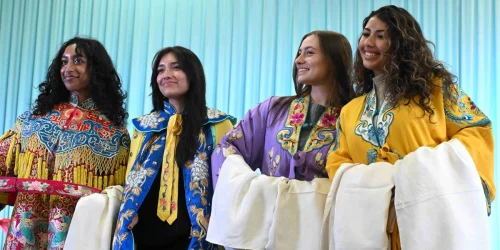
A new social media trend termed "Chinamaxxing" is seeing non-Chinese creators, particularly in the United States, adopting daily rituals from Chinese culture. Videos showcasing the boiling of apples, drinking hot water first thing in the morning, wearing house slippers indoors, and eating congee have amassed millions of views on TikTok.
The trend represents a significant shift in how American youth view China, moving from geopolitical narratives to a fascination with its modern aesthetics, wellness practices, and lifestyle content, according to experts. It has been met largely with encouragement from Chinese commenters online, who distinguish it from cultural appropriation.
Modern China as a Lifestyle Inspiration
Jacob Cooke, CEO of Beijing-based e-commerce firm WPIC Marketing + Technologies, stated that Americans are encountering a "modern, aesthetic, and confident" image of China on TikTok, a powerful corrective to outdated perceptions. "American influencers are visiting China and showing off modern cities and lifestyles that look nothing like the image of China that many Americans grew up with," he said.
Cooke explained that practices like drinking hot water are "comfort practices" that resonate because they are accessible. China is becoming "a source of food, aesthetics, fashion, and lifestyle content" appealing to young Americans.
Soft Power and Cultural Exchange
Allison Malmsten, a public research director at Daxue Consulting, linked the trend to a "mass exodus of TikTok users to Xiaohongshu" – China's version of the app – during threats of a US ban last year. This gave American Gen Z direct insight into the daily lives of their Chinese peers.
"China's soft power is rising, similar to that of Japan in the 2000s," Malmsten said, referencing the global popularity of anime and video games that sparked a fascination with Japanese culture. "Chinese culture is increasingly seen as cool." The popularity of Chinese brands like Pop Mart has also increased its appeal.
Reception: Appreciation vs. Lived Reality
The trend has drawn positive reactions from many Chinese users. TikTok user EmmaPeng, based in San Francisco, commented, "My culture can be your culture." Another New York-based creator, Lynn, remarked, "What took y’all this long to catch on?"
Commenters frequently distinguish the trend from appropriation. "Appreciation for a culture is totally different than appropriation," one user wrote. Another ethnically Chinese commenter thanked creators for "influencing me to be more culturally Chinese."
However, for some, the trend highlights a stark contrast. Christina Young, a Chinese TikTok user in New York, finds it "wholesome" but also "slightly weird having experienced racism." She noted, "It's really striking that being Chinese is trendy now, as a couple of years ago, it was a legitimate risk for you on the streets," urging mindfulness as "real Chinese people are still dealing with racism."
The ‘Chinese Baddie’ Blueprint
Several creators have credited TikTok user sherry, who brands herself a "Chinese baddie," with popularising many of the habits. Her content has spawned a wave of followers asking about the benefits of hot water and affectionately calling her "Chinese mama." The trend also saw non-Chinese users adopting traditions like not washing hair on Lunar New Year to avoid washing away good fortune.
As a blend of wellness experiment and aesthetic role-play, "Chinamaxxing" underscores a complex, evolving cultural exchange where lifestyle habits become a conduit for changing perceptions, even as the lived experiences of diaspora communities present a more nuanced reality.