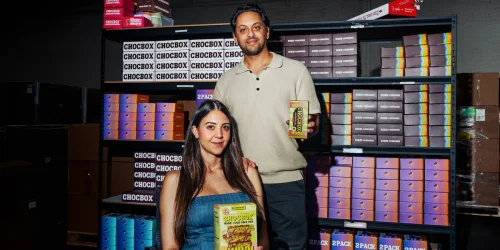
Brittany Nemandoust's small business, Chocbox, was on the brink of closure in April 2024. Sales for her DIY chocolate-making kits were insufficient to cover expenses, including rent for a Los Angeles office and payroll for a part-time employee, leading her to take on credit-card debt. A conversation with her husband, Kevin, about shutting down was interrupted by her unwavering optimism that the company would eventually "blow up."
Weeks later, that intuition proved correct. Nemandoust identified a viral trend on TikTok where users attempted to recreate a thick, pistachio-filled "Dubai chocolate" bar. Leveraging a custom-designed, thicker chocolate mold she had created years prior and ingredients sourced from a local Middle Eastern grocery, the couple filmed a "raw" tasting video. The response was immediate, garnering over 100,000 views in a day and hitting TikTok Shop's daily order cap of 100 sales consecutively.
Chaotic Fulfilment and Rapid Scaling
The viral spike created an urgent supply crisis. Key ingredients like kataifi pastry and pistachio cream were difficult to source, requiring calls to Turkish markets and gelato shops across Los Angeles. To pack orders, the couple enlisted friends and family, working 15-hour days. "When you go viral, you need it now," Nemandoust told Business Insider. "You don't have time to go through a hiring process."
During this period, they focused on building operational systems to avoid fulfilment failures, which Kevin identified as a potential momentum killer. They created assembly instructions, used photos and videos as packing guides, and gradually expanded from a small cubicle to a 6,000-square-foot warehouse. Kevin quit his corporate job in 2025 to work on Chocbox full-time, and the company now employs eight people.
Building a Community for Sustained Growth
To transform viral interest into a lasting business, Chocbox invested heavily in community building. Nemandoust hosted live streams on TikTok, packing kits in real time and interacting directly with viewers to build trust and personalise the brand. "I want people to think of me when they think of Chocbox," she said.
The company also cultivated a network of roughly 30 highly engaged affiliates, dubbed "Chocboxers," through TikTok's native system. These creators tag products in their videos for a commission, with some earning thousands of dollars monthly. "We invest in them, and they invest in us," Kevin said. "They're an extension of our brand."
Product Discipline and Future Outlook
Despite the surge, the company maintained a disciplined product strategy centred on its hero chocolate-making kit, later adding refill kits and a jarred pistachio filling called "Dubai Dip." Nemandoust emphasised a policy against mediocrity, stating, "When we release products, they have to be really good." Customer feedback directly informs new product development.
The company has now sold over 300,000 units on TikTok Shop. Reflecting on the journey from near-collapse to milestone success, Kevin noted the unseen turbulence: "If people really knew how hard it was behind the scenes, the amount of turbulence it took to get here is insane." The couple's advice to aspiring founders is to simply begin, asserting that the only true obstacle is oneself.