Some commercial flights have resumed from Abu Dhabi, even as airlines and airports issue conflicting statements about widespread suspensions following Iranian strikes. The confusion has left thousands of passengers stranded and airlines scrambling to adjust operations amid significant airspace restrictions across the United Arab Emirates.
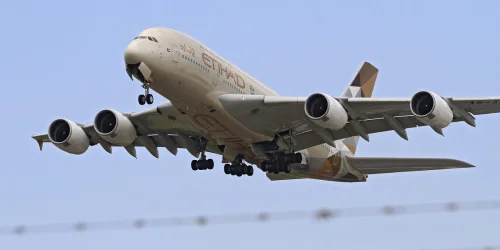
On Monday, 12 Etihad Airways wide-body jets departed Abu Dhabi International Airport for destinations including London, Paris, Amsterdam, Moscow, and several cities across the Middle East and South Asia. This occurred despite an official statement from Etihad on social media platform X announcing a suspension of all flights to and from Abu Dhabi until 2 p.m. local time on Tuesday.
Massive Public Interest and Operational Chaos
The first flight to depart, an Airbus A380 bound for London at 2:39 p.m. local time, was tracked by nearly 100,000 users on Flightradar24, highlighting the intense global scrutiny on regional air traffic. However, operational clarity remains elusive. A banner on the airport's own website advised passengers to check with their airline due to the "temporary closure of UAE airspace," while simultaneously showing several flights available for check-in.
The disruption stems from a security incident on Sunday, where a Nepali national was killed and seven others were injured by debris after an Iranian drone targeting Abu Dhabi airport was intercepted, according to officials. In response, flights from other major hubs including Dubai, Qatar, Bahrain, and Kuwait remained suspended as of 8 a.m. ET on Monday.
Airlines Forced into Unconventional Measures
The chaotic situation has forced airlines into unusual operational decisions. A Lufthansa Airbus A380 also departed Abu Dhabi for Munich on Monday, but carried only its two pilots. A Lufthansa spokesperson confirmed to Business Insider that the aircraft had been in Abu Dhabi for three months undergoing maintenance and was being repositioned.
The airline stated it reviewed the possibility of carrying passengers but concluded it was unfeasible. "It would require at least 17 flight attendants who can't be flown in due to the current massive restrictions on air traffic in the United Arab Emirates," the spokesperson said. They cited unreliable planning for passenger check-in, security, and boarding under the circumstances.
Etihad Airways and Abu Dhabi International Airport did not immediately respond to requests for comment from Business Insider, adding to the information vacuum for affected travellers. The conflicting messages from official channels suggest authorities and airlines are navigating a rapidly evolving and complex security and logistical landscape, with passenger convenience a clear casualty.