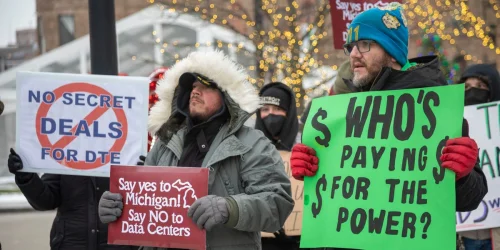
Data centres, the sprawling facilities powering the artificial intelligence boom, have rapidly become a unifying political battleground across the United States. Politicians from Ron DeSantis and Josh Hawley to Bernie Sanders and Elizabeth Warren are finding rare common ground in calling for stricter regulation of the energy-intensive industry, as voter backlash grows over rising utility bills and environmental concerns.
This localised opposition is now influencing state and national policy. In 2024 alone, advocates and residents delayed or blocked an estimated $98 billion worth of proposed data centre projects, according to the monitoring group Data Center Watch. A November survey by Morning Consult found 41% of voters now support a ban on AI data centres near their homes.
From Economic Boon to Political Liability
For years, states actively courted data centre development, lured by promises of job creation and tax revenue from vacant land. Approximately three dozen states offer tech companies tax incentives for building them, as reported by the National Conference of State Legislatures. However, the scale of recent expansion has triggered a powerful NIMBY ("Not In My Backyard") response.
By the end of 2025, the US housed over 4,000 data centres with nearly 3,000 more planned or under construction, a report from the pro-tech coalition American Edge Project states. "The issue is becoming both more tangible and more salient to the average voter," says Flavio Hickel, a professor of American politics at Washington College in Maryland, noting it feeds into broader economic anxieties.
A Bipartisan Legislative Pushback
The political reaction is emerging from both sides of the aisle. In New York, Democratic state Senator Liz Krueger proposed a three-year moratorium, warning, "Massive data centres are gunning for New York, and right now we are completely unprepared." Similar moratorium bills have been introduced in Georgia, Maryland, and Oklahoma, with sponsors from both major parties.
At the national level, Senator Bernie Sanders has called for a federal moratorium, while a bipartisan bill from Republican Senator Josh Hawley and Democratic Senator Richard Blumenthal aims to curb associated utility bill hikes. The core complaint is financial: a Bloomberg analysis found electric bills have increased by up to 267% in areas near significant data centre activity compared to five years ago.
The Trump Factor and Big Tech's Stance
Former President Donald Trump has positioned data centres as crucial for American dominance in AI, issuing executive orders to fast-track their construction by cutting regulatory "red tape." However, he has also called for tech companies to "pay their own way" for the increased energy burden. A Politico/Public First poll in January found Trump voters were 12% more supportive of building more data centres nationally than Kamala Harris voters.
Tech leaders argue the infrastructure is essential. OpenAI CEO Sam Altman warned in 2024, "If we don't build enough infrastructure, AI will be a very limited resource that wars get fought over." Yet, the long-term local job benefits are disputed. A legislative audit in Virginia indicated that while a centre might employ 1,500 during construction, it may need only 50 permanent staff to maintain operations.
An Emerging Election Issue
With midterm elections approaching, the data centre debate is shifting from local planning meetings to the campaign trail. In Virginia—home to "Data Center Alley"—backlash contributed to a primary upset in 2023. Virginia Governor Abigail Spanberger made energy affordability a key campaign issue in her 2024 race.
"Data centres are going to be a very sweet issue for challengers and a pretty tough one for incumbents," says Miquel Vila, lead analyst with Data Center Watch. A January poll found 17% of Americans expect data centre regulations to be a voting factor, with 57% believing it will become a campaign issue in their area.