Google has placed a $1 billion order for a pioneering long-duration battery system from startup Form Energy to power a new data centre in Minnesota, according to a report by *The Information*. The deal represents a major commercial breakthrough for the battery technology, which is designed to discharge electricity for over four days.
The iron-air battery system will provide 300 megawatts of power continuously for 100 hours. It will work alongside 1.4 gigawatts of wind power and 200 megawatts of solar energy to ensure the new data centre's operations are powered by clean energy, even when renewable sources are not generating.
A 'Breathing' Battery for Grid Stability
Form Energy's technology operates on a principle of "rusting" and "un-rusting" iron. Oxygen is pumped into the battery cells, causing the iron to rust and release electrons to generate electricity. To recharge, an electrical current is applied to convert the rust back into iron, releasing the oxygen.
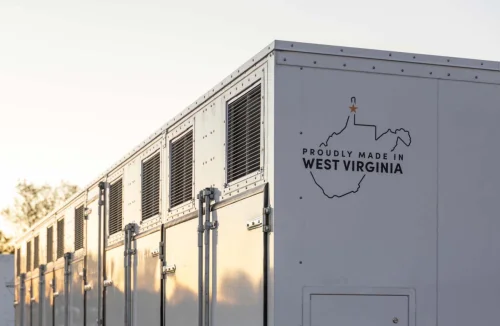
"This is a significant validation of our multi-day storage technology," said Mateo Jaramillo, CEO of Form Energy. The company has been developing the iron-air battery for years and recently opened a manufacturing facility in West Virginia to begin production.
Financing a Public Listing
With the landmark Google order secured, Form Energy is now in the process of raising a new $500 million funding round. To date, the company has raised approximately $1.4 billion from investors, according to data from PitchBook.
The startup has announced plans to go public next year, a move that will be bolstered by having a flagship, billion-dollar customer like Google on its books. The deal demonstrates growing corporate investment in advanced energy storage solutions critical for a full transition to renewables.
The Context of Long-Duration Storage
While lithium-ion batteries dominate the market for short-duration storage (up to about 4 hours), technologies like Form Energy's are seen as essential for managing longer gaps in wind and solar generation, which can last for days. Google's investment signals a major tech company's commitment to solving the intermittency challenge of renewable power for its energy-intensive data centres.
The financial scale of the deal underscores the capital required to deploy next-generation grid infrastructure. Analysts suggest such investments will become more common as corporations with large climate pledges seek reliable, 24/7 clean energy.