Google announced on Tuesday that it will construct its first data centre in Minnesota, a facility in Pine Island backed by a landmark 1.9 gigawatts of clean power. The project includes a pioneering 300-megawatt battery from startup Form Energy, capable of delivering power for 100 hours, which will be the largest battery in the world at 30 gigawatt-hours.
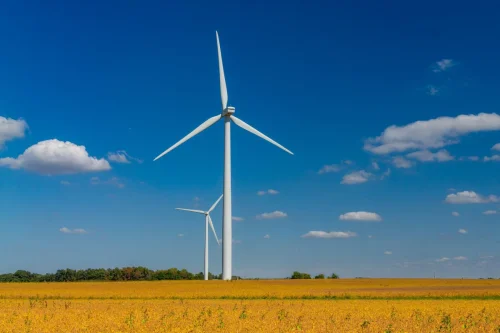
The tech company is partnering with utility Xcel Energy to develop 1.4 gigawatts of wind power and 200 megawatts of solar power. Both renewable sources will feed directly into Form Energy's innovative iron-air battery, a technology designed to "firm" the power supply by providing electricity during nighttime hours or lulls in renewable generation.
A New Battery Chemistry for the Grid
Form Energy's battery operates on a fundamentally different principle from the lithium-ion batteries common in today's grid-scale storage. Its technology stores energy through the controlled rusting and de-rusting of iron. When oxygen from the air flows over iron inside the battery, it rusts, generating electricity. To recharge, an electrical current reverses the process, deoxidising the rust back into metallic iron.
While iron-air batteries are less efficient—delivering 50% to 70% of the energy used to charge them compared to over 90% for lithium-ion—they offer a significant cost advantage. Form Energy states that 1 kilowatt-hour of storage will ultimately cost just $20, making it at least three times cheaper than current lithium-ion technology.
Financing Clean Tech Innovation
The project introduces a novel utility fee structure to Minnesota, first developed by Google in Nevada for a deal with geothermal startup Fervo. Known as a "clean transition tariff" or "clean energy accelerator charge," the agreement allows Xcel Energy to invest in newer technologies like Form's battery. Google pays a premium to ensure regular utility ratepayers are not financially burdened by the potentially riskier project, satisfying regulators who mandate the cheapest possible power sources.
Form Energy's first commercial battery is already being installed in Minnesota with cooperative utility Great River Energy. That unit will store 150 megawatt-hours. The company manufactures its batteries at a factory in West Virginia and has raised $1.4 billion in funding to date, according to PitchBook data.
Context and Future Impact
The Minnesota data centre represents a significant step in powering major tech infrastructure with reliable, around-the-clock clean energy. Long-duration storage solutions like Form's battery are seen as critical for integrating higher levels of wind and solar power into national grids. Google's use of a specialised financing model could provide a blueprint for other corporations seeking to accelerate the adoption of emerging clean technologies without shifting costs to the public.