Google has announced a significant update to its Gemini AI on Android, introducing a beta feature that enables the artificial intelligence to automate multi-step tasks such as ordering a ride or food delivery. The capability, which began rolling out on Wednesday, is currently restricted to the Gemini app on specific high-end smartphones in the United States and South Korea.
The company frames the innovation as a way for users to offload parts of their to-do lists to the AI assistant. In practice, the automations will initially support a select group of apps within the food delivery, grocery shopping, and rideshare sectors.
Limited Rollout and Security Measures
The feature is exclusive to the Google Pixel 10, Pixel 10 Pro, and Samsung Galaxy S26 series devices. This staged release allows Google to test the system's reliability in controlled environments. Recognising the potential for errors in AI-driven actions, the company has implemented several safeguards.
Automations require an explicit voice or text command from the device owner to initiate and cannot start autonomously. Users can monitor the task's progress in real-time through a secure, virtual window on their phone and have the option to stop it at any point. Google emphasises that the automation process is isolated, accessing only the permitted apps without reaching into the rest of the user's personal data.
Part of a Broader AI Automation Trend
This development aligns with a growing industry trend where AI is increasingly tasked with managing personal and professional workflows. Competing services like OpenAI's ChatGPT offer users the ability to create scheduled tasks and employ an AI agent for computer-based duties. Similarly, Anthropic's Cowork tool brings automation to everyday file and task management for non-coders.
"An AI tool called OpenClaw recently went viral for its ability to manage everyday tasks like sending emails, managing calendars, checking into flights, and more," the announcement noted, contextualising Google's move within a competitive and rapidly evolving market.
Additional Gemini Updates Launching
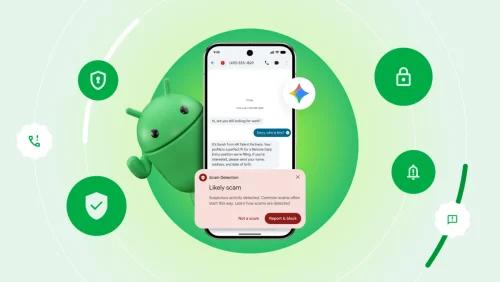
Alongside the automation feature, Google is expanding other Gemini-powered capabilities. The Scam Detection feature for phone calls is now arriving on Samsung Galaxy S26 series devices in the U.S., having already been available on Pixel phones in several countries including the U.S., U.K., and India.
Furthermore, Google is deploying its on-device Gemini model to detect scam text messages in the U.S., Canada, and the U.K. on Pixel 10 series phones, with plans to extend it to the Galaxy S26 series soon.
The popular Circle to Search feature also receives an upgrade. Previously limited to identifying single objects, it can now search for all items visible on the screen simultaneously. This allows users, for example, to get information on every clothing item and accessory in an outfit photo with one gesture.
Strategic Context in the AI Race
This suite of updates represents Google's steady cadence of integrating Gemini deeper into the Android ecosystem through operating system updates and targeted "Pixel Drop" enhancements. The announcement comes at a time when competitor Apple has faced delays in rolling out its own comprehensive AI feature set, including a much-anticipated AI-powered Siri, which has been pushed back to later in the year.
The strategic release underscores the intensifying competition to define the future of personal device assistants, with automation and proactive task management becoming key battlegrounds.