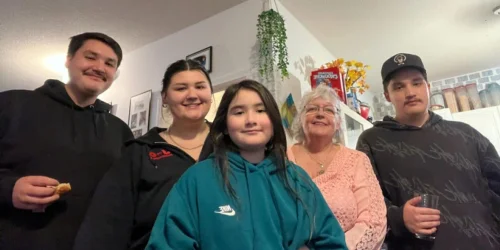
Cindy Chiasson, a 63-year-old resident of Canada's Yukon Territory, is raising four of her grandchildren, aged 9 to 24, while working full-time with no retirement plan in sight. The former corrections officer took custody of the children after her daughter's struggles with addiction and domestic violence rendered her unable to parent.
Chiasson's journey into grandparental care began over a decade ago when her daughter arrived unexpectedly at her apartment with three young children and subsequently disappeared for two weeks following a domestic violence incident. Social services intervened, but Chiasson insisted the children remain with her rather than enter foster care.
A Lifelong Commitment
What Chiasson initially hoped would be a temporary arrangement has become a permanent responsibility. "After the first year, I knew I was in this for the long haul with the grandkids," she told Business Insider. The situation has affected her relationships with her other children and their families, creating resentment as she lacked the energy for additional family gatherings or sleepovers.
The three eldest grandchildren, now 24, 22, and 21, lost their father to addiction, a loss Chiasson says was "really hard for them." Despite these challenges, all have graduated high school, with the eldest doing so with honours. "They have First Nations heritage, and I want to see them keep that," Chiasson emphasised.
Systemic Challenges in the North
Chiasson faced immediate practical hurdles, receiving no government financial assistance for beds or other essentials when the children first arrived. Her apartment did not allow children, but her landlord made an exception. The severe housing crisis in the Yukon presented the biggest obstacle, with rentals large enough for her family costing $3,000 to $4,000 per month, excluding utilities.
Her salvation came through Habitat for Humanity, which accepted her application for a home where the family has now lived for 13 years. "We have a major housing crisis, and it's even worse today than when I first got them," she stated, explaining why her two older grandchildren, who work full-time, cannot afford to move out.
Balancing Work, Health, and Family
Chiasson manages a building for second-stage residents at the Yukon Women's Transition Home, supporting women who have escaped domestic violence. This professional experience has given her "compassion, patience, and understanding for people struggling with addiction," though she admits to initial anger at her daughter's situation.
Now, with her health beginning to decline, Chiasson acknowledges the care dynamic may eventually reverse. "There will be a time when they're going to have to help me out," she said. Her family maintains a strong bond; her granddaughter Sierra described being raised by her grandmother as "a huge honour" and praised her as her "biggest cheerleader."
Chiasson advocates for family-based care over state systems, arguing it prioritises children's mental health over financial gain. "More and more grandparents are taking custody and raising grandkids," she observed. "But I just love my babies."