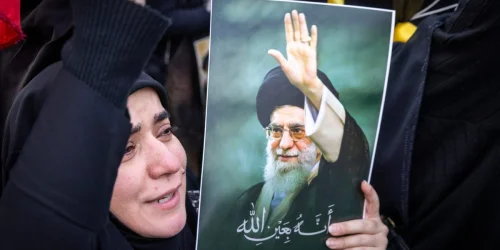
The Lebanese militant group Hezbollah and the Israel Defense Forces (IDF) exchanged strikes on Monday, significantly escalating hostilities and opening a new front in the ongoing regional conflict. The attacks mark a direct entry of the Iran-backed group into the war that began with strikes against Iran over the weekend.
In a statement carried by Lebanese media, Hezbollah claimed responsibility for launching "a barrage of advanced missiles and a swarm of drones" against a missile defence site in Haifa, northern Israel. The group stated the attack was carried out "in revenge for the pure blood of the Supreme Leader of Muslims," referring to the death of Iranian Supreme Leader Ayatollah Ali Khamenei.
Israeli Retaliation and Evacuation Orders
The IDF confirmed it had begun striking Hezbollah targets in Lebanon "in response to projectile fire toward northern Israel." The Israeli military stated that the Hezbollah launches "fell in open areas" within Israeli territory. It accused Hezbollah of "operating on behalf of the Iranian regime, opening fire against Israeli civilians, and bringing ruin to Lebanon," and declared its troops were prepared for "an all-fronts scenario."
The Israeli air force said its strikes targeted the Beirut area. Social media footage from the Lebanese capital showed damaged cars and buildings, particularly in the southern suburb of Dahieh, though the full extent of the damage remains unclear. The IDF has also instructed residents of approximately 50 villages in southern and eastern Lebanon to evacuate, signalling an expectation of further military action.
Broader Regional Conflict
Hezbollah's involvement directly links the conflict to Iran, which the US and Israel began attacking on Saturday with a multi-domain assault. Tehran, Washington, and Tel Aviv confirmed that Khamenei was killed within the first 24 hours of those hostilities. In response, Iran launched missiles and drones at over half a dozen neighbouring countries, including the United Arab Emirates and Bahrain, targeting what it called military sites.
The entry of Hezbollah, a politically powerful force in Lebanon and a key Iranian proxy, marks a significant expansion of the conflict. However, the depth of its continued involvement is uncertain. Concerns persist that the Iran-aligned Houthi rebels in Yemen may soon renew attacks on commercial shipping in the Red Sea, a tactic previously used to protest Israeli actions in Gaza.
Strategic Waterways Under Threat
Further complicating the regional security picture, several oil tankers reported coming under attack on Sunday in the Strait of Hormuz, a vital chokepoint for global oil shipments located between the Persian Gulf and the Gulf of Oman. While Iran maintains significant control over the strait, it is not yet clear who is responsible for these latest incidents.
The simultaneous flare-ups across multiple fronts—from the Mediterranean coast to the Arabian Peninsula—raise the prospect of a prolonged and widening regional war, with immediate consequences for civilian populations, global energy markets, and international shipping lanes.