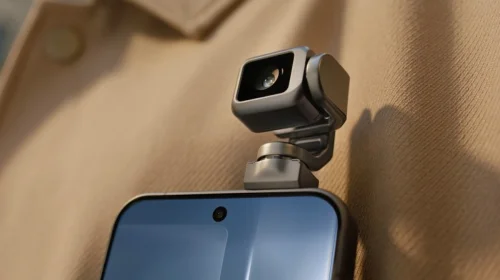
Chinese technology company Honor has revealed comprehensive details about its upcoming "Robot phone," featuring a movable camera arm with autonomous capabilities. The device, first teased earlier this year, is scheduled for launch in the second half of 2026 and will be showcased at the upcoming Mobile World Congress (MWC) in Barcelona.
The company states the robotic camera possesses an AI-driven "personality," enabling it to respond to users with gestures like head shakes and even dance to music. Users can interact with the phone's assistant via text and voice commands for tasks like receiving apparel suggestions.
Advanced Camera and Stabilisation Technology
The device is equipped with a 200-megapixel camera mounted on a proprietary three-axis robotic gimbal with stabilisation technology. Honor claims this allows the camera to rotate smoothly for capturing stable video and photos, featuring a dedicated Super Steady mode for video.
A key photographic feature is "Spinshot," which commands the robotic camera to rotate by 90 or 180 degrees to achieve cinematic shots. For video calls, AI-powered object tracking enables the camera to follow the user, a function likened to an enhanced version of Apple's Center Stage feature.
Engineering and Hardware Innovations
Honor developed its own micro motor to control the robotic movements and utilised engineering techniques from its foldable phone division to ensure durability. The robotic arm integrates a four-degree-of-freedom gimbal system into a standard phone body.
The materials used for the arm are the same as those in the hinge of the Honor Magic V6 foldable, boasting a tensile strength of 2800 MPa.
Broader Product Launch
The "Robot phone" announcement coincided with the launch of several other Honor products. The company also introduced the Honor Magic V6 foldable with a 6,600 mAh battery, the Honor MagicPad 4 tablet, and the Honor MagicBook 14 laptop.
Industry analysts will be watching closely for the commercial reception of the robotic camera phone, which represents a significant departure from conventional smartphone design, at MWC later this year.