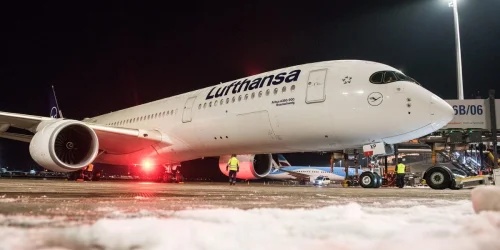
Approximately 600 passengers were forced to spend a night on board six grounded aircraft at Munich Airport last Thursday, 6th February, after a severe snowstorm disrupted operations. The airport, Europe's 10th-busiest, was unable to process the departures before its extended 1 a.m. curfew due to de-icing queues and runway closures.
With around 100 flights cancelled that day, all terminal parking stands were occupied, leaving the affected aircraft stranded on the apron. Airport authorities stated that transporting passengers to the terminal was impossible as "bus service was severely restricted" late at night due to communication issues.
Airlines' Response and Passenger Distress
Five of the affected flights were operated by the Lufthansa Group, with a sixth flight run by UAE-based budget carrier Air Arabia. While Munich Airport said airlines "provided the passengers with the best possible care on the aircraft," passenger accounts contradict this.
"There was no food or drink for us. There were no blankets for us either," said Søren Thieme, a passenger on one of the Lufthansa flights bound for Copenhagen, in an interview with Danish newspaper Ekstra Bladet. He added that requests to enter the terminal were denied as all bus drivers had reportedly gone home, leaving passengers and crew "simply trapped."
Official Investigation and Apology
The Upper Bavaria North Police have prepared a report on the incident, which Chief Inspector Sven Otto confirmed will be submitted to the public prosecutor on Tuesday, 11th February. Inspector Otto noted that, as of Monday, no formal complaints had been filed by affected passengers with the police.
In a statement, Munich Airport "apologized expressly" to the passengers, acknowledging that "these incidents do not meet our standards." The airport emphasised that passenger safety and satisfaction remain its top priority.
Both Lufthansa and Air Arabia did not immediately respond to requests for comment from Business Insider, which first reported the story.
Context of the Disruption
The disruption occurred amidst temperatures dropping to -1°C (30°F) and heavy snowfall, which caused periodic, short-notice runway closures. The airport's standard midnight closure was extended by one hour to 1 a.m. on the day in question under a special permit, but this proved insufficient to clear the backlog.
The incident highlights the operational challenges major European hubs face during extreme winter weather, where cascading delays and a lack of available ground infrastructure can lead to significant passenger discomfort.