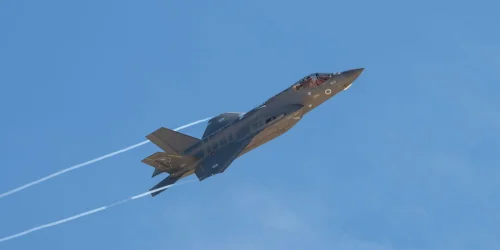
Israel conducted its largest-ever air operation on Saturday, striking approximately 500 targets across western and central Iran with roughly 200 fighter jets. The Israeli military described the widespread airstrikes as a "preemptive" action, targeting Iranian air defence systems, missile launchers, and other military infrastructure.
The United States military participated in the coordinated attacks, with American air, land, and naval forces launching drones, rocket artillery, and cruise missiles. US fighter aircraft joined Israeli F-35 stealth fighters and F-15 jets in the operation, which was based on what Israel called "extensive planning and high-quality intelligence."
Suppression of Enemy Air Defences
The Israeli military stated that the initial strikes focused on suppression of enemy air defences (SEAD), a tactic designed to neutralise anti-aircraft systems. This approach, the military claimed, allowed Israel to establish aerial superiority over Iranian territory for the duration of the operation.
US Central Command (CENTCOM), which oversees American operations in the Middle East, confirmed its forces targeted facilities belonging to Iran's Islamic Revolutionary Guard Corps. These included command and control centres, air defences, and military airfields.
Iranian Retaliation and Regional Fallout
Iran responded by launching waves of missiles against Israel and US bases across the Middle East, triggering widespread air defence alerts. CENTCOM reported its forces "successfully defended against hundreds of Iranian missile and drone attacks," with several regional countries confirming they had intercepted projectiles.
While there are no reports of US casualties or significant damage to American facilities, multiple reports indicate hundreds of Iranians have been killed and wounded in the strikes. This marks the second major US attack on Iran in less than a year, following Operation Midnight Hammer in June 2025, which targeted the country's nuclear facilities.
Context of Escalation
The massive aerial assault follows a steady buildup of US military forces in the Middle East and Eastern Mediterranean, including more than a dozen warships and hundreds of aircraft. President Donald Trump characterised the American involvement as the start of "major combat operations," a shift that came after nuclear talks between Washington and Tehran broke down.
The region now faces heightened instability, with the scale of the Israeli operation and direct US combat involvement representing a significant escalation in the long-standing shadow conflict between Israel and Iran.