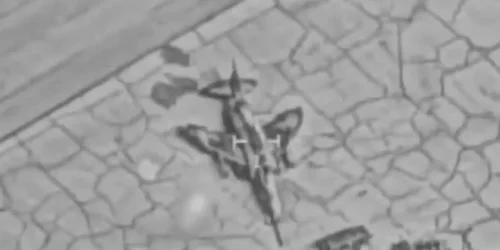
The Israel Defense Forces (IDF) have released video footage showing strikes on two of Iran's ageing, US-made fighter jets at an airport in Tabriz, western Iran. The strikes, which occurred on Sunday morning, reportedly hit a McDonnell Douglas F-4 Phantom II and a Northrop Grumman F-5 as they were preparing for takeoff.
The IDF stated the attacks "were conducted to degrade the Iranian Air Force’s activities and to further expand the degradation of their aerial defence." The operation is part of a wider joint US-Israeli campaign against Iran, dubbed Operation Epic Fury by Washington and Operation Roaring Lion by Israel, which began with massive attacks on Saturday.
Campaign Aims for Regime Change
The stated objective of the ongoing military campaign is to eliminate Iranian leadership and usher in regime change in Tehran. As of Sunday, Israeli and US officials claim to have taken out dozens of Iranian officials, including Supreme Leader Ayatollah Ali Khamenei. In response, Iran has launched retaliatory missile and drone strikes against Israel and bases hosting US troops in Qatar and the United Arab Emirates.
The US has stated operations are aimed at crippling Iran's military, with both nations indicating the campaign will continue for weeks. The strike on the vintage jets specifically targets an Iranian Air Force constrained by decades of international sanctions and an inability to modernise its fleet.
An Ageing Fleet of Cold War Relics
Iran's operational air force relies heavily on aircraft acquired from the United States prior to the 1979 Iranian Revolution. Its inventory is estimated to include roughly 60 F-4 Phantoms, fewer than 50 F-5s, and 20 to 30 F-14 Tomcats. However, actual airworthy numbers are believed to be significantly lower due to attrition, maintenance hurdles, and some aircraft being stripped for parts.
The F-4 Phantom, a twin-engine fighter that entered US service in the early 1960s, was a workhorse during the Vietnam War. Iran has kept some of these aircraft flying through reverse-engineering, but their combat capabilities are limited against advanced fourth- and fifth-generation fighters like the F-35 stealth jets, F-16s, and F-15s operated by Israel and the US.
Strategic Degradation of Air Power
Analysts note that degrading Iran's already limited air combat and defence capabilities is a key tactical objective. Israel has stated it has achieved air superiority over parts of Iran during the current conflict. The strikes on the Tabriz airport underscore the technological disparity between the forces and the vulnerability of Iran's static, ageing assets.
The future of Iran's air force remains deeply contested, with its effective power constrained by long-running sanctions and the ongoing attrition from the current conflict. The US and Israel have signalled their intent to continue operations aimed at fundamentally weakening Tehran's military infrastructure in the coming weeks.