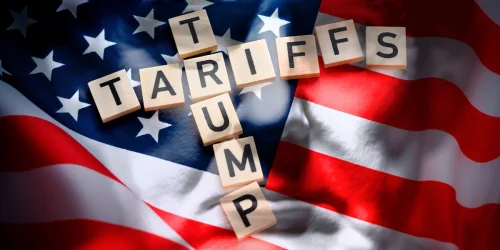
Several of the world's largest corporations are suing the United States government for refunds of tariffs paid under a law the Supreme Court has now deemed illegal. The Court ruled on 20 February that tariffs enacted under the International Emergency Economic Powers Act (IEEPA) by the previous administration were unlawful. According to US Customs and Border Protection (CBP), over $129 billion in tariff revenue had been collected under IEEPA as of 10 December.
While the Supreme Court did not explicitly order refunds, the ruling has prompted immediate legal action from major importers. These companies argue that without separate court judgments, they are not guaranteed repayment, especially as the customs process of "liquidation" could permanently bar refunds once completed. The legal battles are now concentrated at the US Court of International Trade.
Race Against Liquidation
The urgency for many plaintiffs stems from the CBP's liquidation process. Typically, duties paid undergo liquidation within a year of the goods' entry. Once finalised, reclaiming the money becomes significantly more difficult. "It is not an unsolvable problem," one attorney told Business Insider, but time is a critical factor. Companies are filing suits to block this liquidation and secure their right to a refund before the legal window closes.
Key Plaintiffs and Their Claims
Costco Wholesale Corporation filed a lawsuit in December 2025, arguing the IEEPA—enacted in 1977—has never authorised tariffs. "The text of IEEPA does not use the word 'tariff' or any term of equivalent meaning," the company's lawyers stated. Costco warned its imports could begin entering liquidation as early as mid-December 2025, potentially closing the door on refunds. The company has not disclosed the amount it paid.
Toyota Group subsidiaries, including Toyota Tsusho America, filed in November 2025. They stated the action was necessary because entries would begin final liquidation by 31 January 2026, jeopardising refund rights. The auto sector has been heavily exposed to these tariffs; Toyota estimated in May 2025 that higher rates could cost it about $1.3 billion over a two-month period.
Chinese electric vehicle giant BYD filed on 9 February, marking the first lawsuit from a Chinese carmaker. It is seeking a refund of "all IEEPA tariffs paid to date" and "all IEEPA tariffs that may be paid in the future." While BYD does not sell passenger cars in the US, its American business includes buses, commercial vehicles, batteries, and a truck plant in Lancaster, California, employing 750 people.
Broad Impact Across Industries
The litigation spans multiple sectors. Goodyear Tire & Rubber filed on 10 December 2025, detailing how frequently changing tariffs on China affected its operations. The company, which sources raw materials globally, asked the court to block liquidation because duties imposed ministerially cannot be protested after the fact.
Alcoa Corp, a top global producer of aluminum, filed for refunds on 26 November 2025. Its case is among dozens consolidated under AGS Company Automotive Solutions v. United States Customs and Border Protection, the lead case on IEEPA duty liquidation as of December 2025. Tariffs on most steel and aluminum imports had risen to 50% by June 2025.
Legal Precedent and Next Steps
FedEx Corporation became the first major corporation to sue for a "full refund" after the Supreme Court ruling, filing on 23 February. It cited the Court's confirmation that such challenges fall "within the exclusive jurisdiction of the Court of International Trade." The global logistics giant, which processes 17 million packages daily, did not specify the exact refund amount sought.
The consolidated legal proceedings will now determine whether billions of dollars in tariff payments must be returned to corporations. The outcomes will set a significant precedent for the limits of presidential emergency powers in trade policy and have substantial financial implications for both the US government and global supply chains.