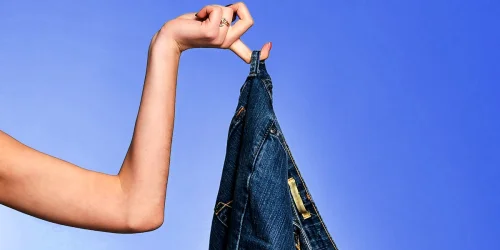
The uniform of a generation has been declared obsolete. Skinny jeans, the defining silhouette for millennials throughout the 2000s and 2010s, are now widely seen as a marker of being out-of-touch, as denim trends fragment and accelerate at internet speed. The shift highlights a built-in "social obsolescence" within fashion, pressuring consumers—particularly women—to constantly update their wardrobes to maintain a modern identity.
Sales of skinny jeans declined in 2021 for the first time in a decade, according to industry data. The garment has joined ankle socks and side hair partings as signifiers of a cohort that is no longer ascendant. "Skinny jeans make you look old," says Sonya Abrego, a New York-based design historian.
The Pendulum Swings from Skinny to Wide
Wide-leg and baggier styles began dominating fashion-forward circles around 2017, says Susie Draffan, a senior denim strategist at trend forecasting firm WGSN. However, mass adoption was delayed by the pandemic, which saw people working from home in sweatpants instead of denim. Post-lockdowns, the market has seen a "democratization" of denim, with multiple styles trending simultaneously.
"Multiple styles are trending simultaneously, as consumers swap between jean silhouettes to suit their outfits and moods," Draffan says. This variety, however, does not currently include the skinny jean, leaving many millennials feeling culturally sidelined.
Denim as a Vehicle for Body Politics and Identity
The anxiety around jeans is deeply personal because the garment is tied to youth, identity, and social belonging. "Jeans are a vehicle for commenting on, thinking about, and forming social expectations around the body that's inside the jeans," says fashion historian Emma McClendon. She notes a strong connection between jeans, the body, and sexuality in marketing since the 1970s.
This pressure is not equally shared. While men's styles evolve slowly, women's jeans cycle rapidly, and women face greater societal pressure regarding appearance and ageing. "A man wearing the same Levi’s 501s from college to his 50th birthday is timeless; a woman doing the same would get some eye rolls," the analysis finds.
The Capitalist Churn and Consumer Resistance
The rapid trend cycle is advantageous for the fashion industry. "The fashion industry builds in this social obsolescence," says behavioural psychologist Carolyn Mair. "However well we try to phrase it, looking old is something that most people do not aspire to." This mechanism challenges personal identity and nudges consumers to buy new items.
Some are opting out. Consultant Aja Barber, who focuses on sustainability, says many reach a point where they stop caring about the "circus." She advocates for second-hand shopping, noting denim production is highly polluting. "There’s nothing new under the sun when it comes to jeans," she says.
Navigating the New Denim Landscape
For consumers like Stephanie Borman, a 39-year-old in San Francisco, the current diversity is an opportunity to find styles that suit a changing body and life stage. "I thought, gosh, why am I continuing to squeeze myself into a style that doesn’t serve me... and just might not be culturally relevant?" she says.
Yet, the sheer number of styles—from cargo pants to cross-waistband jeans—can be overwhelming, and not all trends work for all body types. The current denim renaissance, or "denim-ssance," offers freedom but also ensures that, eventually, every style will date its wearer. As McClendon concludes, while trends are inevitable, wearing an outdated cut "doesn’t make you cultural garbage."