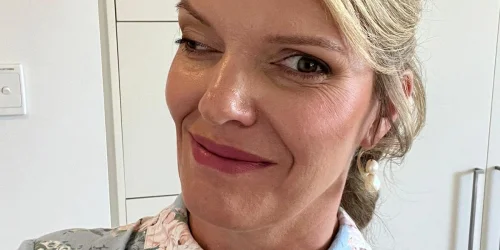
Sarah Hayles, a 44-year-old mining engineer from Queensland, Australia, has spent over 15 years living with an undiagnosed facial injury that changed her appearance and self-perception. The condition began after a routine eye surgery in August 2008 to remove a pterygium, a non-cancerous growth. Despite extensive testing, including an MRI and a lumbar puncture, no definitive diagnosis for her resulting eye droop and movement issues was ever reached.
The psychological impact was profound, leading Hayles to avoid photographs and doubt her prospects for marriage. A pivotal moment came in 2013 when a doctor advised her to accept her condition and move forward. This shift in mindset, bolstered by her own research into positive psychology, marked the beginning of her journey toward regained confidence.
A New Chapter and a Changed Perspective
In 2015, Hayles met her future husband, Brian, 45, a diesel fitter, through mutual friends on Facebook. They were engaged and married within a year. "Focusing on appearances is BS. If you do, you can easily miss the person within," Hayles stated, reflecting on how the relationship reshaped her values.
The couple now have two children: Jack, 8, and Astrid, 6. Hayles, who had initially feared having children due to potential stigma, says she raises them to value character over looks. "It's all about how someone behaves and how they make you feel," she tells them.
From Patient to Public Speaker
Hayles has channeled her experience into a public role, now working as a keynote speaker on topics of resilience and confidence. She also runs an Instagram account aimed at normalizing visible differences and facial injuries.
She acknowledges occasional awkwardness, particularly when children stare, but emphasises no malice is intended. "I give them grace. Nobody is being malicious," she said.
An Unresolved Medical Mystery
The medical origin of her condition remains unknown. Initial concerns in 2010 included potential serious diagnoses like a brain tumour or multiple sclerosis, both of which were eventually ruled out after two years of testing. Hayles described some procedures, such as nerve tests involving electric shocks, as traumatic.
She credits the 2013 consultation, where a doctor told her she was "beautiful, healthy, and strong," with ending the cycle of invasive tests and allowing her to build a life beyond her injury. "I know I could have allowed this facial injury to be something awful that ruined my life, or turned it into a positive. I'm glad I chose the latter," Hayles concluded.