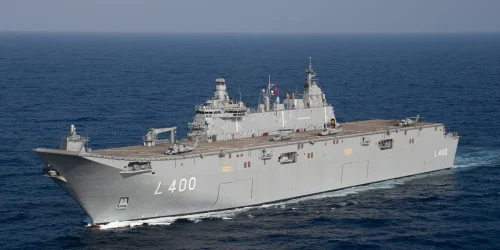
NATO is deploying the Turkish Navy's flagship drone carrier, the TCG Anadolu, to the Baltic Sea in response to repeated Russian airspace violations. The deployment, announced on Friday by Allied Joint Force Command (JFC) Brunssum, is part of the defensive 'Eastern Sentry' operation launched in September.
The 750-foot vessel will operate towards the coast of Latvia, contributing to enhanced air surveillance and defence capabilities. This move follows a series of incidents where Russian drones crossed into Polish airspace, necessitating a military response from the alliance.
A Clear Signal to the East
JFC Brunssum stated the deployment is "a clear signal to the east" and sends an "unmistakable message" of NATO's readiness to defend its territory. The timing and duration of the Anadolu's mission remain unclear, as Turkish defence officials and NATO commands have not provided further operational details.
The carrier joins the 17-vessel Steadfast Dart fleet, of which it is the largest ship. NATO allies have been surging fighter jets and warships to the Baltic region in recent months to counter the increased threat of aerial incursions.
Turkey's Repurposed Flagship
The TCG Anadolu, commissioned in 2023, is the Turkish Navy's only drone-carrying amphibious assault ship. Originally designed to carry helicopters and F-35B fighter jets, it was repurposed for drone operations after Turkey's expulsion from the F-35 programme over its purchase of Russian S-400 missile systems.
The vessel can deploy Bayraktar TB-3 and Bayraktar Kızılelma combat drones, manufactured by the Turkish defence company Baykar, alongside various attack helicopters. Its deployment marks a significant enhancement of NATO's maritime drone capabilities in Northern Europe.
NATO's move reflects a broader global trend, with nations like Iran and China having developed their own drone carriers. Portugal is also expected to receive a similar vessel later this year.