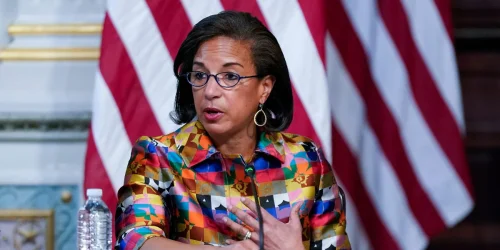
Netflix board member Susan Rice has ignited a debate over corporate governance and political speech after publicly criticising President Donald Trump. The former Obama and Biden administration official made the remarks during an appearance on the podcast "Stay Tated with Preet Bharara," prompting a retaliatory demand from Trump for her removal from the streaming giant's board.
The incident comes at a sensitive time for Netflix, which is pursuing an $82.7 billion acquisition of Warner Bros. Discovery—a deal requiring approval from the US Department of Justice's antitrust division. While Rice's actions broke no laws, governance experts are divided on whether she crossed an ethical line for a corporate director.
Divided Opinions on Director Conduct
Charles Elson, founding director of the Weinberg Center for Corporate Governance at the University of Delaware, called Rice's public criticism "poor judgment." He argued that a director's primary fiduciary duty is to act in the company's best interests, which he believes her remarks contravened. "She has to ask herself, 'Am I a public figure or am I a corporate director?'" Elson stated.
In contrast, Jo-Ellen Pozner, a professor at Santa Clara University's Leavey School of Business, suggested Trump's reaction validated Rice's concerns. "Trump's reaction just points out how important what she has to say is," Pozner said, noting the president's threat was not typical conduct.
Risks and Repercussions for Corporate Boards
The public spat could influence how companies approach appointing political figures to their boards. Elson suggested the incident might make corporations reconsider such appointments, questioning whether former public servants are truly "retired" from political life.
More broadly, experts fear a chilling effect on public speech by business leaders. Pozner warned, "I think it will have a dampening effect on public speech," citing the president's history of targeting critics and calling for boycotts.
Governance experts say the incident should serve as a case study for corporate boardrooms. Bradley Akubuiro, a partner at Bully Pulpit International, advised companies with pending regulatory approvals to watch the case closely. "The lesson is: Understand when your company is at peak vulnerability and govern that accordingly," he said.
Potential Safeguards and Policy Responses
To prevent similar controversies, Akubuiro suggested companies could enact "quiet periods" during sensitive moments, akin to those before quarterly earnings reports. "You just want to recognize that in a politicized moment, anything that's quasi-political can become a weapon," he explained.
Jennifer Schielke, CEO of Summit Group Solutions, emphasised the need for defined communication policies for board members, especially during high-stakes regulatory processes. "The boardroom should be designed for robust dissent that is productive and private," she stated.
Jill E. Fisch, a professor at the University of Pennsylvania, advised board members to seek counsel and weigh the costs and benefits of public statements. However, she clarified, "That is completely different from being cowed into not saying anything."
Netflix co-CEO Ted Sarandos has since referred to the Warner Bros. bid as a "business deal" and "not a political deal." Rice, Netflix, and the White House did not respond to requests for comment from Business Insider.