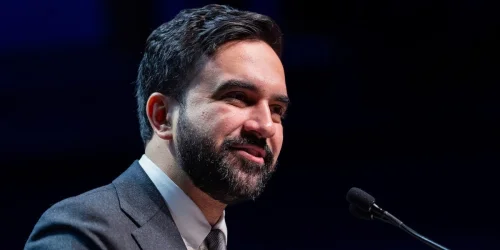
New York City Mayor Zohran Mamdani and Governor Kathy Hochul have jointly announced a new tax proposal targeting wealthy non-residents who own second homes in the city. The proposed annual 'pied-à-terre' tax would apply to luxury residential properties valued at over $5 million, a move the Hochul Administration estimates could generate up to $500 million in new revenue.
The policy, a fulfilment of a key campaign promise by Mayor Mamdani, aims to address what supporters call a misalignment between the city's immense wealth and its tax base. The announcement has ignited a sharp debate among policy experts, economists, and real estate leaders over its potential effectiveness and broader economic ramifications.
Supporters See a Fair Revenue Source
In a statement published by the Fiscal Policy Institute, its director, Jonas Shaiken, framed the tax as a necessary correction. "This is an important step in building a tax code that reflects the city's immense wealth and can fund deep investments in its workforce, housing, and transit infrastructure," Shaiken wrote. He argued that for 15 years, city revenues have failed to keep pace with economic growth, creating pressure on public services.
Economist Gabriel Zucman of the Paris School of Economics, speaking at Mayor Mamdani's Tax Day forum, challenged the common argument that such taxes drive away the wealthy. "It is largely indeed a myth," he stated, calling the narrative "propaganda." He cited empirical studies on tax variation and migration, concluding the effect on relocation is minimal.
Critics Warn of Unintended Consequences
Opponents, however, warn the tax could have damaging ripple effects. Nicole Gelinas, a senior fellow at the Manhattan Institute, criticized the proposal as a "gimmicky, tax-the-rich idea" and a "marketing ploy" rather than rational tax reform. She suggested a better approach would be to gently discourage keeping properties unoccupied as part of broader property tax changes.
The real estate industry issued strong warnings. Bess Freedman, CEO of Brown Harris Stevens, wrote in a staff memo that the impact "would extend far beyond a narrow segment of the market," suggesting a decline in luxury values could compress prices across the board.
James Whelan, President of the Real Estate Board of New York, stated the tax "will weaken the city’s broader economy" and could "eliminate thousands of construction jobs, lower property values, and raise costs for New Yorkers." He urged a focus on policies that encourage housing production and investment.
Context and Next Steps
The proposal emerges as New York State's budget negotiations remain stalled. The tax would require approval from the state legislature in Albany. The debate now moves to the political arena, where its fate will be determined alongside broader fiscal discussions. Proponents view it as a tool for equity, while detractors see it as a potential drag on the city's economic recovery and housing market stability.