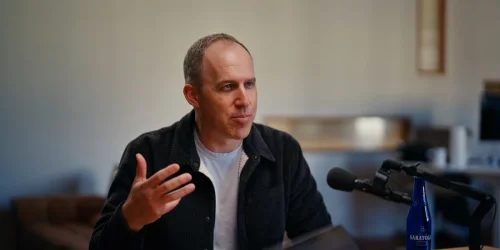
Bret Taylor, the Chairman of OpenAI's board, has expressed a clear preference for board members to prepare for meetings using traditional written documents rather than slide presentations or artificial intelligence tools. Taylor, who is also the former co-CEO of Salesforce and co-founder of AI startup Sierra, made these remarks during a recent appearance on the "Uncapped with Jack Altman" podcast.
He argues that the act of writing without AI assistance is a valuable cognitive exercise that forces clarity of thought. His expectation is that all board members read these pre-circulated documents thoroughly before meetings, ensuring discussions are focused on strategic substance rather than initial data review.
The Case for Concise, Pre-Read Documents
"I really like written documents for boards over presentations," Taylor stated. "You end up letting people synthesize information ahead of the board meeting, so you end up with more substantive discussions in the board room." He emphasised that the critical factor is that the material "has been read ahead of time," transforming the meeting into a debate on core issues.
This approach prevents scenarios where participants are "staring at a bunch of sales numbers for the first time," he added. While acknowledging Amazon founder Jeff Bezos's famous advocacy for six-page memos, Taylor specifically favours brevity, viewing it as a sign of respect and careful consideration for stakeholders' time.
Brevity as a Sign of Respect and Rigour
"It's like what's that famous line – if I had more time, I would have written a shorter letter," Taylor said, referencing a quote often attributed to Blaise Pascal. "Spend the time because that's actually how you can show respect to your stakeholders that you're thinking about the strategic issues going on in your business."
This philosophy positions the manual drafting process not as inefficiency, but as a disciplined practice essential for high-quality governance and decision-making at the highest corporate levels.
Regulatory Future May Demand AI "Agents"
Despite his personal preference for AI-free preparation, Taylor does not dismiss the technology's potential in other high-stakes areas. He offered a prediction regarding future regulation, suggesting that human oversight in regulated processes might itself be seen as a risk.
"If you want a hot take, I think my intuition is regulators will start asking for agents," Taylor speculated. "The idea that you have a human set of controls over a regulated process will start to feel like a risk, rather than the risk being AI."