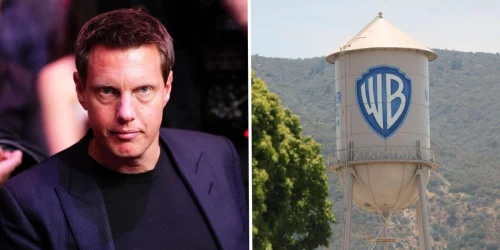
The Paramount-Skydance consortium has emerged victorious in the protracted battle for control of Warner Bros. Discovery (WBD), agreeing to a $110 billion acquisition. The deal concludes after rival bidder Netflix withdrew from negotiations, a move that will see WBD pay the streaming giant a $2.8 billion breakup fee. The proposed merger immediately triggered significant opposition from politicians and antitrust advocates concerned about media consolidation and political influence.
Netflix's exit followed a higher bid from the Larry and David Ellison-run Paramount-Skydance entity. Industry analysts noted the swiftness of Netflix's withdrawal. "What is surprising to me is the speed with which Netflix had pulled out, and I respect their choice not to pretend they're still in it and prolong the game," said Wharton School assistant professor Daniel Nary, who researches mergers and acquisitions.
Political and Regulatory Firestorm
The deal has ignited a fierce political and legal backlash. Democratic Senator Elizabeth Warren, who opposed last year's Paramount-Skydance merger, issued a statement calling the latest transaction "an antitrust disaster threatening higher prices and fewer choices for American families." She added, "A handful of Trump-aligned billionaires are trying to seize control of what you watch and charge you whatever price they want."
California Attorney General Rob Bonta confirmed his department has an open investigation. "The California Department of Justice has an open investigation, and we intend to be vigorous in our review," Bonta stated, emphasising the transaction was "not a done deal."
Senator Adam Schiff (D-CA) released a statement demanding the deal be "free from White House political influence" and subjected to the "highest levels of scrutiny" due to its potential impact on American jobs and freedom of speech.
Concerns Over Editorial Independence
Advocacy groups have raised alarms about potential threats to journalistic and creative freedom under the new ownership. Seth Stern, director of advocacy at the Freedom of the Press Foundation, expressed concern that David Ellison would capitulate to political demands. "Ellison will readily throw the First Amendment, CNN's reporters and HBO's filmmakers under the bus if they stand in the way of expanding his corporate empire and fattening his pockets," Stern wrote.
These concerns were echoed by political commentators who noted the timing of Netflix's withdrawal. MSNBC anchor Chris Hayes posted on X that it was "pretty relevant" the announcement came after Netflix's co-CEO met with White House officials and regulators in Washington.
Strategic and Legal Manoeuvring
Analysts predict Paramount will attempt to close the deal rapidly to complicate potential legal challenges. Matt Stoller, director of research at the American Economic Liberties Project, explained the strategy in a Substack discussion. "That means they get to take over all these assets and start running them," Stoller said. "They can fire people. They can intermingle the assets... Trying to unwind operations where assets are already intermingled would be like 'unscrambling eggs.'"
Despite the scale of the deal, some financial observers questioned its economics. Ross Gerber, cofounder of wealth management firm Gerber Kawasaki, joked on X: "Haha. They paid $110 billion. Netflix gets $2.8 billion. Zaslav laughing to the bank. Welcome to Hollywood kid," referring to WBD CEO David Zaslav.
An Existential Move for Paramount
For Paramount, the acquisition is viewed as critical for its survival in a rapidly consolidating media landscape. William D. Cohan, cofounder of Puck, described it as "the outcome that had to happen" in a podcast interview. "This is existential for Paramount," Cohan said. "Without this, they're just like an $11 billion company, which once upon a time would be nothing to sneeze at, but now was a pipsqueak in this landscape."
The path forward remains fraught with regulatory hurdles. Senator Warren concluded her statement by asserting, "It'll be up to the American people to speak up and state attorneys general to enforce the law," setting the stage for a prolonged and contentious review process.