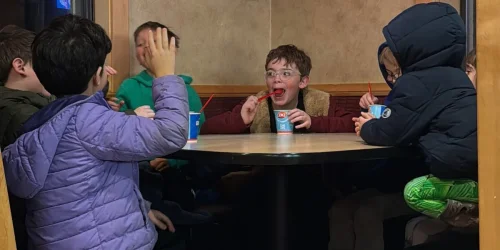
A family in Maine chose to host their son's eighth birthday dinner at a restaurant without inviting the other children's parents, observing unexpectedly positive results. The event, held at a hibachi restaurant followed by ice cream, involved seven children aged 5 to 9 and was managed solely by the hosting couple.
The parents, who are close friends with the other children's families, made the decision to allow the group of friends to celebrate independently. They reported that the children were exceptionally well-behaved and engaged in meaningful conversations amongst themselves, dynamics rarely seen during typical supervised playdates or school interactions.
Improved Behaviour and Social Dynamics
The hosting parents noted that the children's conduct was significantly better without their own parents present. "I always joke that my kids are so much better-behaved around teachers, babysitters, and other adults in their lives. Turns out it's not just my kids," one parent observed. The children successfully navigated the restaurant experience, including meal selection and waiting patiently.
During the ice cream outing that followed, the hosts sat at a separate table, facilitating unsupervised conversation. The children discussed upcoming sleepovers and family trips, with the host joking in a text to other mothers that she was "getting all the gossip," such as one parent frequently forgetting to pack a toothbrush.
A Model for Community Support
The experience provided a dual benefit: entertainment for the children and respite for the other parents. In a community where many are parenting without local family support, the couple saw value in offering fellow parents a free Friday night. They discussed the potential of rotating this responsibility among their friend group.
The chosen venue, a hibachi restaurant, provided built-in entertainment with the chef's performance, including tossing broccoli for the children to catch. The hosts were also surprised by the independence shown by even the youngest attendees, who followed the cues of the older children.
Lasting Impressions and Future Plans
The positive outcome was immediate. Upon being dropped off, the children began discussing which restaurant to visit for the following year's celebration. The hosts reflected that the experience highlighted how boyhood enjoyment can extend beyond stereotypical activities like Nerf guns and sports to include simple socialising over a meal.
The experiment challenged the conventional format of children's birthday parties and suggested an alternative model that fosters independence and provides valuable downtime for parents within a supportive community network.