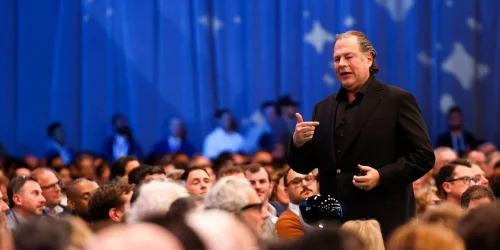
Marc Benioff, the Chief Executive Officer of Salesforce, has publicly dismissed concerns that the rapid advancement of artificial intelligence (AI) will render traditional software-as-a-service (SaaS) companies obsolete. The comments were made during the company's quarterly earnings call on Wednesday, directly addressing recent market anxieties.
Benioff framed the integration of AI as an enhancement to the SaaS model, not its replacement. "If there is a 'SaaSpocalypse', it may be eaten by the 'SaaS-quatch' because there are a lot of companies using a lot of SaaS because it just got better with agents," he stated on the call.
Market Concerns and Salesforce's Counter
Fears of a significant disruption to the software industry escalated in recent weeks following the release of new agentic AI tools by Anthropic. This development contributed to volatility in software stocks, including shares of Salesforce and project management firm Asana. A separate research report this week further compounded worries by outlining a potential AI-driven economic downturn.
In response, Benioff pointed to strong demand for Salesforce's own AI platform, Agentforce, telling investors the company was witnessing "incredible demand." He also highlighted that leading AI firms are themselves customers of Salesforce's ecosystem. "Anthropic runs its whole operation on Salesforce and Slack. I think every AI company does," he added.
Historical Perspective and Investor Reaction
The CEO reminded stakeholders that this is not the first perceived existential threat the SaaS sector has faced. "This is not our first SaaSpocalypse. We have been through many SaaSpocalypses," Benioff said, referencing the industry's resilience. He specifically recalled the challenges of 2020, stating, "I remember the horrible SaaSpocalypse of 2020 when not only the software industry was dying, but we were all dying, but we made it through that."
The market responded positively to Benioff's confident stance. Following the earnings call, Salesforce shares rose by approximately 2% in early trading on Thursday, suggesting investor reassurance.