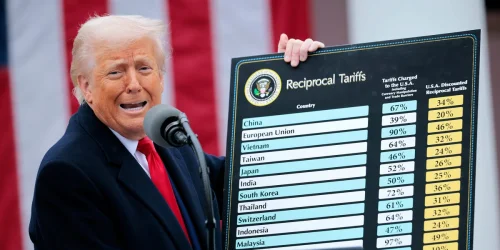
The United States Supreme Court has blocked a significant portion of President Donald Trump's sweeping tariff policy, in a major legal setback for the administration. However, the ruling has opened a new phase of economic uncertainty, with President Trump announcing plans over the weekend to impose a new 15% "worldwide" tariff.
The court's decision on Friday did not close the chapter on the contentious trade policy but instead initiated a complex legal and financial aftermath that experts are still analysing. The immediate consequence is the invalidation of a key mechanism the administration used to levy billions in duties.
The Refund Question and Legal Chaos
One of the most pressing issues arising from the Supreme Court's decision is the fate of approximately $133 billion in taxes already collected under the now-struck-down tariffs. More than a thousand companies have preemptively filed lawsuits seeking refunds, setting the stage for a protracted legal battle.
"The process isn't as simple as the US government cutting a check," analysts noted. "It's bound to get messy and involve lots of lawyers." Companies must now weigh the benefit of pursuing refunds against the potential risk of antagonising the current administration.
Some Democratic lawmakers have called for the administration to issue direct $1,700 refunds to American citizens, though such a move remains speculative. Financial giant Goldman Sachs has warned consumers not to expect lower prices as an immediate result of the ruling.
New Tariffs and Market Reaction
In response to the court's block, President Trump is utilising Section 122 of trade law, which allows him to implement broad tariffs for a limited period. This new 15% worldwide tariff can legally remain in place for up to 150 days, after which the President would likely need Congressional approval for a more permanent measure.
Market reaction is mixed, presenting a double-edged sword for investors. While the ruling sets a legal precedent that may curb future executive tariff power—a positive for many businesses—it also removes a source of government revenue. This loss of tariff income highlights the federal government's growing debt, which could push bond yields higher and negatively impact stocks.
Investment firm Jefferies has identified several consumer stocks that could benefit from the new trade landscape.
Broader Economic Impact and Unresolved Questions
The enduring presence of tariffs in some form makes a definitive economic assessment difficult. Data from the past year indicates the US economy continues to grow, though the benefits are not uniformly distributed. Notably, many of the dire economic predictions associated with President Trump's initial tariff policies have not materialised, a phenomenon some think tanks have attempted to explain.
The situation leaves clear winners and losers; the legal profession is expected to see significant demand, while many Chief Operating Officers face continued supply chain instability due to ongoing "tariff whiplash."
Further clarity on the administration's trade policy direction is anticipated during President Trump's first State of the Union address of his second term on Tuesday night, though a warm reception for some Supreme Court justices is unlikely.