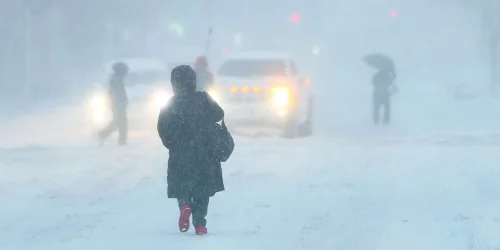
A major blizzard continued to batter the Northeast United States on Monday, causing widespread power outages, flight cancellations, and road closures, with forecasts predicting up to two feet of snow in some areas. In such severe winter weather, preparedness is critical. The American Red Cross has highlighted several common, non-traditional items that can prove invaluable for safety and survival during a snowstorm.
Beyond standard emergency kit staples like food, water, and first-aid supplies, ordinary household objects can offer surprising utility. Business Insider consulted with the American Red Cross to compile a list of these unexpected aids.
Financial and Fire Safety Fundamentals
Access to cash becomes paramount when digital systems fail. "In a major emergency, oftentimes ATMs won't be working and stores won't accept credit cards, so it's good to have extra cash on hand," advised Michael de Vulpillieres, a former communications officer for the American Red Cross, in a 2020 interview.
Home fire risks significantly increase during winter months due to heightened use of alternative heating. De Vulpillieres warned, "At the Red Cross, we see some major fires during extreme weather events like blizzards. You want to be careful when you're heating your home." He emphasised extreme caution with candles, fireplaces, and space heaters, which are frequent fire sources. Space heaters must be placed on a flat, hard surface at least three feet from flammable materials, and ovens should never be used for home heating.
Improvised Traction and Warmth
For motorists, becoming stuck in snow is a common hazard. Sand or non-clumping cat litter can be spread under tyres to provide grip on ice. Salt can help melt ice and prevent re-freezing. If available, floor mats can also be placed under tyres to prevent slipping. In a pinch, natural materials like pine needles and sticks can increase traction.
Adding weight to a car, by pressing down on the bonnet or placing heavy items like rocks on it, can improve traction when trying to drive out of snow. De Vulpillieres noted a key principle: "In snow, it's better to pull than to push," indicating that pulling a vehicle is more effective than pushing it from a ditch.
Simple Solutions for Common Problems
Newspapers can serve as an improvised insulation layer. De Vulpillieres suggested crumpling them and stuffing them under clothing to retain body heat. A common cooking spray can prevent car doors from freezing shut when applied to the seals and can also stop snow from sticking to a shovel.
If a dedicated ice scraper is unavailable, the edge of a credit card can be used to clear frost from a windscreen, providing a temporary solution until proper tools are available.
Emergency officials stress that while these items can help in a crisis, they are supplements to, not replacements for, a well-stocked winter emergency kit and a plan to monitor official weather warnings and advisories.