US Air Force General Dan Caine, Chairman of the Joint Chiefs of Staff, has provided a detailed account of the initial days of Operation Epic Fury, a major joint combat operation conducted with Israel against Iran. The operation, which began on Saturday, aimed to cripple Iran's military capabilities, with Supreme Leader Ayatollah Ali Khamenei reported killed on the first day.
General Caine stated at a Pentagon briefing that the campaign followed months, and in some cases years, of "deliberate planning and refinement." He described a coordinated effort across all military domains—land, air, sea, and cyber—designed to "disrupt, degrade, deny and destroy Iran’s ability to conduct and sustain combat operations."
Massive Buildup and Final Preparations
Prior to the operation's commencement, US forces conducted a significant buildup across the Middle East. This included thousands of service members from all branches, hundreds of advanced fighter jets, dozens of refueling tankers, and the USS Abraham Lincoln and USS Gerald R. Ford carrier strike groups. Forces were systematically repositioned and bases reduced to essential personnel to mitigate risk.
At 3:38 p.m. on the Friday before the operation, US Central Command received final authorisation from President Donald Trump via the defence secretary, with a message reading: "Operation Epic Fury is approved. No aborts. Good luck!" General Caine emphasised that operational security was paramount to ensure the enemy faced "speed, surprise, and violence of action."
First Waves of Attack
The operation began with US cyber and space capabilities targeting Iran's ability to "see, communicate, and respond." At 9:45 a.m. local Tehran time, significant combat operations commenced as "the sky surged to life."
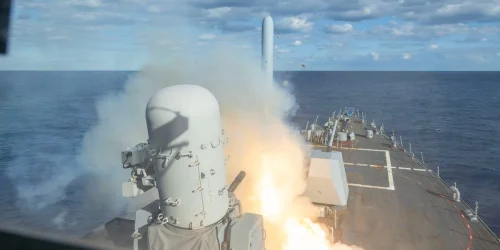
More than 100 aircraft, including fighters, bombers, tankers, and drones, launched from land and sea in a single wave. US Air Force B-2 bombers, on a roughly 40-hour flight from the United States, dropped precision munitions on underground facilities. US Navy warships launched Tomahawk cruise missiles, while precision standoff weapons were fired from ground positions.
Israel separately executed hundreds of aircraft missions against hundreds of targets. General Caine stated the initial 24 hours saw strikes on over 1,000 targets, prioritising command and control infrastructure, naval forces, ballistic missile sites, and intelligence networks to "daze and confuse" the Iranian military.
Defensive Actions and Casualties
General Caine highlighted that the US integrated air defence network, including Patriot and THAAD batteries and Navy destroyers, has intercepted hundreds of missiles targeting US and partner forces. Air defenders have also countered hostile drones.
The conflict has not been without loss. The general acknowledged three US F-15 fighter jets were downed by friendly fire from partner air defences, with the matter under investigation. Additionally, four US service members have been killed since Saturday, with expectations of ongoing fighting and further casualties.
Logistics and Next Steps
General Caine praised logisticians as the "unsung heroes" of the operation, establishing a crucial flow of munitions, supplies, and intelligence. As of the Monday briefing, operations were roughly 57 hours into the campaign. The US expects fighting to continue as it prosecutes what Caine termed a "relentless offensive campaign."