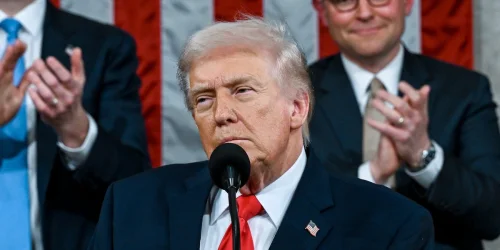
President Donald Trump announced on Tuesday that major technology companies will be required to provide for their own power needs when constructing new data centres. The declaration was made during his State of the Union address, where he framed the move as a measure to protect American consumers from rising utility bills.
"We're telling the major tech companies that they have the obligation to provide for their own power needs," Trump stated. "They can build their own power plants as part of their factory so that no one's prices will go up, and in many cases, prices of electricity will go down for the community."
Details of the 'Pledge' Remain Unclear
President Trump said he had negotiated a new "rate-payer protection pledge" with the companies but did not specify which firms had agreed or detail the exact terms of the arrangement. "They're going to produce their own electricity," he added, without providing a timeline for implementation.
The policy, first reported by Politico, suggests companies agreed to pay more for electricity in localities near their data centres. A White House spokesperson confirmed the report's accuracy to Business Insider but offered no further details on how the pledge would be enforced, given that utility rate decisions are typically made at state and local government levels.
Driven by AI and Soaring Energy Demand
The announcement comes as technology firms invest hundreds of billions of dollars to build artificial intelligence infrastructure, significantly driving up electricity demand across the United States. A report from the Center for American Progress found that this surge in demand from data centres is contributing to rising utility costs nationwide.
President Trump has previously argued that American households should not bear the cost of this industrial expansion. "Companies that build them must pay their own way," he has said, reiterating a stance that places the financial onus for new power infrastructure on the private sector.
Industry Already Moving Off-Grid
In practice, many large technology companies have already begun developing their own off-grid power solutions to ensure reliability and manage costs for their energy-intensive operations. The new federal stance appears to formalise and accelerate this existing trend.
The practical and regulatory mechanisms for implementing the announced pledge remain undefined. It is unclear how the federal government will mandate or coordinate with local utilities and state regulators to enact the policy.