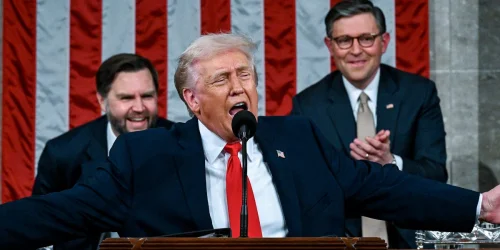
President Donald Trump delivered the longest State of the Union address on record, using the platform to highlight his administration's signature policies and launch pointed attacks against Democrats. The speech, which lasted over an hour and twenty minutes, centred on the economic achievements of tax cuts, a hardline immigration stance, and the implementation of new tariffs.
The President framed these policies as central to American prosperity and security. He presented the tax cuts passed in 2017 as a primary driver of economic growth, while his immigration rhetoric focused on border security. The address also served to outline the administration's ongoing trade strategy, which has involved imposing tariffs on goods from several nations, including China.
Economic Achievements and Political Contrast
Trump dedicated a significant portion of his speech to the Tax Cuts and Jobs Act of 2017, arguing it had spurred job creation and boosted wages. He contrasted this record with what he characterised as Democratic obstructionism, setting the tone for the upcoming electoral cycle.
"Our agenda is relentlessly pro-worker, pro-family, and pro-American," the President stated during the address, directly appealing to his political base. The speech was strategically timed, occurring as the administration prepares for a re-election campaign.
A Hardline on Immigration and Trade
Immigration policy formed another core pillar of the President's message. He reiterated calls for funding a border wall and praised the work of Immigration and Customs Enforcement (ICE) officers, framing immigration control as a matter of national sovereignty and public safety.
On international trade, Trump defended the use of tariffs as a necessary tool to correct what he described as unfair trade practices. "For decades, America's wealth was shipped overseas, but those days are over," he declared, signalling no retreat from the protectionist trade policies that have defined his presidency.
Context and Reaction
The record length of the speech underscores its role as a key political manifesto ahead of the 2020 election. Historically, the State of the Union allows a sitting president to outline legislative priorities and shape the national conversation.
Democratic leaders issued swift rebuttals, criticising the speech's tone and content. House Speaker Nancy Pelosi, who was seated behind the President during the delivery, was seen visibly reacting to several of his claims, highlighting the deep partisan divide in Washington.
The address sets the stage for the political battles to come, particularly over government funding and investigations involving the administration. Analysts suggest the sharply critical tone towards Democrats indicates a presidency moving firmly into campaign mode.