The pay of Transportation Security Administration (TSA) workers remains uncertain after Republican members of the House Freedom Caucus signalled they would block a Senate-approved proposal to fund the Department of Homeland Security (DHS). The partial shutdown, which began on 14 February, has already resulted in two missed paychecks for TSA employees.
Early on Friday, the Senate voted to advance a proposal to end the shutdown, which currently prevents TSA workers from being paid. The Senate-approved legislation excludes funding for immigration operations. For it to become law and release TSA pay, it must now be passed by the House of Representatives.
House Republicans Reject Senate Bill
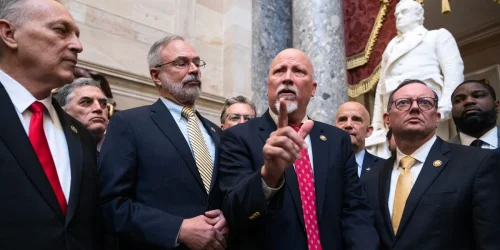
At a press conference, Representative Chip Roy, a Republican from Texas and member of the House Freedom Caucus, criticised the Senate's action. "Could the Senate be any more lazy than to send to us a bill that doesn't do the job and then leave town?" Roy said. "So we're going to stand up and say no to that. We're going to send back a bill that's responsible to the American people."
The caucus members have stated they want to add funding for Immigration and Customs Enforcement (ICE) and Border Patrol back into any spending package, measures omitted from the Senate bill. House Republicans have also considered a 60-day stopgap funding measure, which Senate Minority Leader Chuck Schumer has said would be "dead on arrival in the Senate, and Republicans know it."
Executive Order and Travel Chaos
In response to the growing crisis, President Donald Trump signed an executive order on Friday directing the Secretary of Homeland Security "to use funds that have a reasonable and logical nexus to TSA operations to provide TSA employees with the compensation and benefits that would have accrued to them if not for the Democrat-led DHS shutdown." The order stated the President had determined "current circumstances constitute an emergency situation" compromising national security.
The funding impasse has led to significant operational disruptions at airports across the United States. American travellers have faced hours-long security lines as hundreds of TSA screeners have quit and thousands have called out sick while going without pay.
Next Steps and Ongoing Impact
The situation leaves the proposed funding bill in legislative limbo as Congress departed on a scheduled recess on Friday evening. With the House Freedom Caucus holding firm against the current Senate proposal, a swift resolution to the partial shutdown appears unlikely, prolonging the financial uncertainty for tens of thousands of federal workers and the travel disruptions for the public.