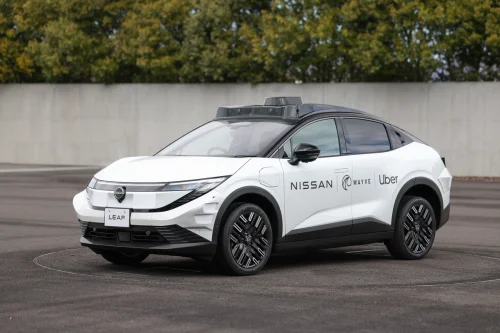
Remember when Uber promised a future without owning a single car? That vision is being quietly dismantled, billion by billion. A new Financial Times analysis has uncovered the jaw-dropping scale of Uber's latest gamble: a commitment of over $10 billion to secure its place in the driverless future.
But here's what's truly revealing. This isn't just a spending spree. It's a calculated, high-stakes pivot to a strategy Uber once abandoned. And it could completely reshape how you get from A to B.
The $7.5 Billion Fleet You'll Never Own
Dig into the FT's numbers, and the real headline emerges. Of that colossal $10 billion, a staggering $7.5 billion is earmarked for one thing: buying robotaxis. Not developing the tech, not just investing in startups—but purchasing the physical vehicles themselves from companies like Rivian, Nuro, and Wayve.
This marks a fundamental shift. Uber is moving from being a pure tech platform to becoming a fleet owner on a monumental scale. "It appears to be focused on owning the physical assets," the analysis notes, a line that could redefine the company's entire balance sheet.
History Repeats: The Ghost of Uber's First Moonshot Era
This feels eerily familiar. Cast your mind back to Uber's last asset-heavy chapter between 2015 and 2018. It was a period of wild ambition: launching flying taxi unit Elevate, creating its own self-driving division (ATG), and buying e-bike startup Jump.
Then, in 2020, it all seemed to collapse. Uber sold ATG, dumped Jump, and offloaded Elevate. The asset-light model was back. Or was it? Uber kept equity stakes in every single one of those sold-off ventures. It never truly left the game; it just changed the playbook.
Now, that playbook is being rewritten again. This time, Uber isn't trying to build the technology from scratch. It's letting others do the hard R&D, positioning itself to simply own—or lease—the finished product. It's a strategy that former CEO Travis Kalanick might rue, having called the abandonment of in-house AV development a "mistake," but one that could still deliver the same autonomous future he envisioned.
Why This New "Assetmaxxing" Era Changes Everything For You
So what does this $10 billion manoeuvre mean for your next ride? Control. By owning the fleets, Uber gains unprecedented command over pricing, availability, and the passenger experience in the robotaxi age. It's a power grab in a market that doesn't fully exist yet.
The ripple effects are already being felt across Silicon Valley. From secretive startups building cab-less autonomous haulers to firms like Slate securing another $650 million to build affordable electric pickups, the race to build the hardware for Uber's new empire is heating up.
Uber's journey proves one thing: in the scramble for the future of transport, there are no permanent strategies, only permanent ambitions. The company that vowed to own nothing is now betting everything on owning it all. The only question left is who will be in the driver's seat when the final bill comes due.