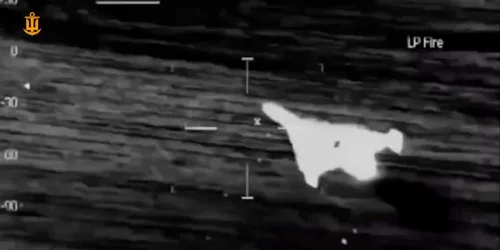
Ukrainian naval aviation helicopter crews have successfully engaged and destroyed at least eight Russian-made Shahed attack drones in a single day, according to footage released by the Ukrainian Navy. The operations, which also targeted Gerbera decoy drones, highlight the growing integration of helicopter units into Ukraine's multi-layered air defence network against one-way attack drones.
The two-minute montage, published on Thursday, shows cockpit and gun camera footage of engagements occurring both during daylight and at night. Thermal imaging was used to track and destroy drones over open terrain, while other clips show engagements high above cloud cover or near coastal settlements over water.
New Tactics for a Persistent Threat
The footage provides a clear look at the tactical requirements for these helicopter-based interceptions. To be effective, crews must match the drone's speed and trajectory, gain sufficient altitude to fire downwards, and close to visual range. The videos show an M134 minigun mounted on a helicopter's side door, though the weapon itself is not seen firing.
This approach represents a strategic shift. Faced with Russia's mass-produced, low-cost Shahed drones, Ukraine has sought inexpensive countermeasures. "Because Russia mass-produces the Shahed and Gerbera, Kyiv has sought more inexpensive means, such as machine guns, instead of traditional antiaircraft missiles to counter them," the report notes.
Proven Effectiveness and Enhanced Capabilities
The tactic has demonstrated significant results. Ukraine's commander-in-chief, General Oleksandr Syrskyi, stated in October that helicopters could sometimes destroy up to 40% of Russian Shaheds and Gerberas in a given area. The use of thermal and infrared cameras, as seen in the latest footage, was among the systems Syrskyi identified for improving helicopter effectiveness.
Compared to ground-based crews using interceptor drones or truck-mounted guns, helicopters offer greater flexibility. They can reposition rapidly to engage multiple threats or hunt drones that alter their flight path—a capability becoming more critical as Russia outfits some Shaheds with advanced communications, guidance systems, and, in rare cases, artificial intelligence.
Evolving Battle in the Skies
The aerial advantage is key. Russia often directs its drones to approach targets at altitudes above 6,500 feet before diving, making them harder for ground defences to hit. Helicopters can engage at these higher altitudes. Beyond helicopters, Ukrainian forces have also mounted M134 miniguns on turboprop planes for similar interceptions.
In response, Russia is attempting to counter the threat. Reports indicate Moscow has tried equipping its Shahed drones with R-60 air-to-air missiles. Furthermore, Ukraine's deputy minister of defence for innovation stated in November that Russia has also begun directly targeting patrolling Ukrainian helicopters and aircraft with Shahed drones.