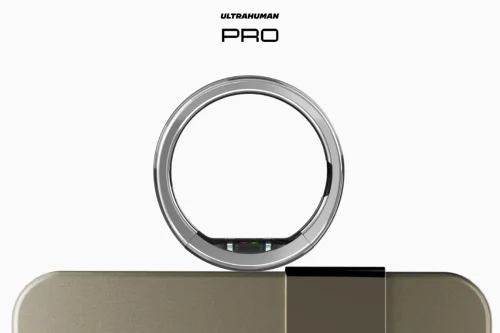
Indian wearable technology company Ultrahuman has unveiled its third-generation smart ring, the Ring Pro, as it seeks to revive its U.S. business following a disruptive patent ruling in favour of rival Oura. The new device, priced at $479, will be available for global pre-orders, excluding the U.S., with shipments beginning in March.
Co-founder and CEO Mohit Kumar confirmed the Ring Pro has been submitted to U.S. Customs and Border Protection for clearance, a necessary step after a 2025 ruling by the U.S. International Trade Commission blocked new inventory imports. The U.S. had accounted for approximately 45% of the company's 700,000 daily active users.
Strategic Redesign and Market Impact
The Ring Pro's new design was developed specifically to work around Oura's patents, Kumar told TechCrunch. The device offers up to 15 days of battery life, a significant increase from the four to six days provided by its predecessor, the Ring Air.
Despite the U.S. disruption, Ultrahuman is operating at an annualised revenue run rate of about $150 million, having reported $64 million in operating revenue for the financial year ending March 2025. The startup remains profitable after tax, though margins are expected to narrow due to litigation costs, tariffs, and the redesign effort.
Enhanced Features and New AI System
Alongside the hardware launch, Ultrahuman introduced Jade, a real-time "biointelligence" system. "Jade is built to react to your health in real time and surface actions users can take," Kumar said, contrasting it with retrospective data analysis tools. The AI system will be available to all Ultrahuman users without a subscription.
The Ring Pro itself features a redesigned heart-rate sensing architecture for improved sleep tracking and a new dual-core processor. It can store up to 250 days of health data and is complemented by a new Pro Charger with 45 days of battery life and Qi wireless charging support.
Market Context and Competitive Landscape
Global smart ring shipments grew nearly 80% year-over-year in 2025, according to Counterpoint Research senior analyst Anshika Jain, driven by demand for compact wearables with advanced sleep tracking. Oura continues to lead with more than two-thirds of the market, while Ultrahuman holds second position.
Separate data from IDC showed global shipments rose about 30% year-over-year in Q3 2025 to nearly 1 million units, with Ultrahuman capturing roughly 25% of the market during that period, said Navkendar Singh, associate vice president at IDC India.
Future Outlook and Company Background
Ultrahuman's key growth markets now include the UK, Canada, Australia, and India, with the latter contributing 8% to 9% of overall revenue. The company is building additional production capacity to support demand for the Ring Pro.
Founded in 2019, Ultrahuman has raised about $55 million from investors including Alpha Wave Incubation, Blume Ventures, Steadview Capital, and Nexus Venture Partners. The company also offers subscription services, which contribute about 16% of revenue, and a metabolic panel called Blood Vision, accounting for 5% to 6% of the business.