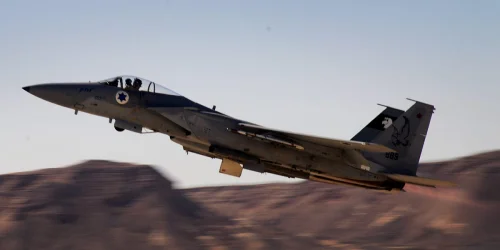
President Donald Trump announced early Saturday that the United States has begun "major combat operations in Iran." The declaration came as US and Israeli forces carried out airstrikes against targets within the country, marking a significant escalation in long-standing tensions.
The Israeli government stated its strikes were "preemptive," aimed at eliminating threats against Israel. A US official confirmed American involvement to Business Insider, noting the military action was ongoing. Footage on social media appeared to show explosions in Iran.
Objectives and Immediate Aftermath
In a video statement posted on Truth Social, President Trump stated the objective was "to defend the American people by eliminating imminent threats from the Iranian regime, a vicious group of very hard, terrible people." Israeli Defence Minister Israel Katz said the action was expected to provoke a missile and drone attack against Israel "in the near future."
This represents the second major military action against Iran by the Trump administration. In June 2025, the US bombed Iranian nuclear facilities in Operation Midnight Hammer, which Trump claimed had "obliterated" the sites.
Context of Failed Diplomacy and Military Buildup
The strikes follow negotiations between the US and Iran, part of Washington's efforts to pressure Tehran into a deal severely limiting its nuclear and military capabilities. The withdrawal of Western diplomats from several Middle Eastern countries preceded the attack.
In recent weeks, the US has significantly increased its military footprint in the region, surging hundreds of fighter jets, reconnaissance planes, and support aircraft. A substantial naval presence includes at least two aircraft carriers—the USS Abraham Lincoln and USS Gerald R. Ford—along with more than a dozen guided-missile destroyers.
Complications and Strategic Signals
The operation faces complications, including public resistance from key allies. The United Kingdom barred the US from using its nearby bases for attacks on Iran, and Jordan similarly refused, despite imagery showing US cargo planes and F-35 stealth fighters at one of its bases.
On Friday, a day after negotiations in Geneva, White House official Dan Scavino posted a photograph on social media of eight B-2 Spirit stealth bombers on a runway, a move interpreted as a strategic signal to Iran.