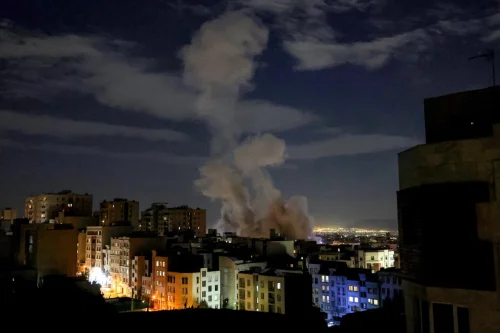
A series of U.S. and Israeli airstrikes early on Saturday killed Iran's Supreme Leader, Ali Hosseini Khamenei, and other top leadership figures. The military strikes, which hit multiple cities including the capital Tehran, occurred alongside a major cyber offensive and a near-total internet blackout across the country.
The attacks followed the collapse of negotiations between Tehran and Washington, which had been initiated after weeks of mass protests that resulted in thousands of deaths and Iran's longest-ever internet shutdown. The dual kinetic and digital assault represents a significant escalation in regional tensions.
Cyber Campaign Targets Civilian App
As missiles struck, users of the popular BadeSaba prayer app, which has over 5 million downloads, were flooded with unsolicited notifications. The messages, reported by Wired, called for a "reckoning" and promised amnesty for those who rose up against government forces.
One notification stated the Iranian regime would "pay for their cruel and merciless actions against the innocent people of Iran." The identity of the hackers who compromised the app to deliver this anti-government messaging remains unclear.
The Jerusalem Post reported that cyberattacks were deliberately used as part of the operation to limit Iran's potential response. Both the U.S. and Israel have previously been suspected of targeting Iranian financial infrastructure, including banks and crypto exchanges, to pressure the leadership that has ruled since the 1979 revolution.
Internet Collapse and Regional Fallout
Internet connectivity in Iran dropped to near-zero levels shortly after the airstrikes began, according to Doug Madory, director of internet analysis at Kentik. Networking firm Cloudflare independently confirmed the collapse of the country's internet on Saturday.
The conflict's effects spilled beyond Iran's borders. Amazon reported an outage at its Middle East data centre in the United Arab Emirates after Iranian retaliatory missiles hit the coastal nation. The company attributed the disruption to "objects that struck the data centre, creating sparks and fire."
The confrontation also threatens critical global commerce, with ships carrying goods through the strategic Strait of Hormuz near Iran grinding to a halt, disrupting vital ecommerce air and sea routes.
Path to Escalation and Future Uncertainty
The military campaign marks a dramatic turn after diplomatic efforts failed. The prior mass protests and severe government crackdown had already created a volatile internal situation, compounded by the extended internet shutdown.
With Iran's supreme leadership decapitated and the country digitally isolated, the immediate focus is on Iran's promised retaliation and the potential for a wider regional war. The integration of cyber operations with conventional military strikes sets a new precedent for modern conflict, with immediate consequences for both regional stability and global digital infrastructure.