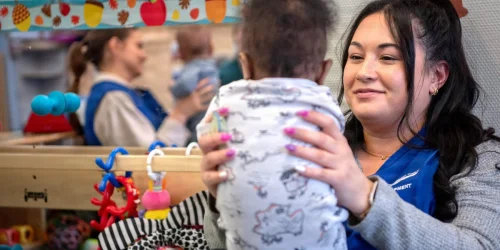
An estimated 7,800 children are on waitlists for US military childcare, a figure lawmakers and advocates say masks deeper systemic failures that sideline working spouses and strain service members. The backlog, described as a critical quality-of-life issue during a recent congressional hearing, has fallen from 12,000 in 2024 but excludes families who have given up seeking help.
Advocates argue the official number does not account for families unable to use base centres that lack evening, weekend, or specialised care for children with medical needs. "We can't say that we are a military that cares about our families if we pretend to provide childcare and then we've got a waitlist that's got 7,800 babies waiting on it," said Massachusetts Democratic Senator Elizabeth Warren to senior enlisted leaders last week.
Service-Specific Shortfalls and Data Gaps
During the hearing, service leaders acknowledged their respective shortfalls. Master Chief Petty Officer of the Navy John Perryman stated the Navy has roughly 1,400 children in "unmet need status," while Chief Master Sergeant of the Air Force David Wolfe said his service's waitlist stands at around 2,700. It remains unclear how the remaining waitlisted children are divided among the other military branches.
A 2023 Air Force report highlighted a stark disparity: in 2022, the service had 95,000 children under 5 but space for only about 23,000 in its Child Development Centres (CDCs). An Air Force spokesperson attributed this to the high turnover of children entering and leaving care throughout the year, noting that "the annual number served will not correlate with daily capacity."
Barriers Beyond the Waitlist
For many families, the challenge extends beyond simple backlogs. Kayla Corbitt, founder of a nonprofit helping military families find childcare, explained that staying on a waitlist requires logging on every few months to reconfirm interest, or families are automatically disenrolled. "Anyone needing evening care, weekend care, shift work care, which is a lot of the military, they aren't going to try to get on that waitlist," Corbitt said, as most CDCs do not offer care for unusual hours.
Children with special needs face particularly significant obstacles. Brigit Schneider, an Air Force spouse and mother of three, cannot return to work as a financial planner because her local CDC will not accept her child who requires a gastrostomy (G-tube) for feeding. "From a special needs mom perspective, it's an extra layer of challenge," Schneider told Business Insider, noting she pays nearly $1,000 monthly for on-base care for one child while another receives private care.
Staffing Crisis and Retention Failures
Compounding the access problem is a staffing crisis. Senator Warren noted that military childcare workers face an attrition rate of around 50%, driven largely by low pay. Sergeant Major Carlos Ruiz, the Marine Corps' top enlisted leader, added that nearly 40% of childcare workers are military spouses. "If we can just be a little bit more smart about transferring folks and directly hiring from one CDC to another, we can reduce the attrition," he said.
A 2024 Government Accountability Office report found that while the services focus on recruiting new workers, they do not consistently measure the effectiveness of employee retention efforts. This persistent issue has been repeatedly flagged by government watchdogs.
A Mirror of National Crisis
The military's childcare shortages reflect a broader national crisis. For many American families, a year of childcare can cost an entire average salary, with prices having increased by over 150% in the last 25 years, often outpacing inflation. In some regions, childcare costs now exceed housing payments.
The Air Force, in a statement following an inquiry, said its childcare programs are "supported by a multidisciplinary team of experts" and that it works with families to identify appropriate care settings. The service stated that waitlist data helps inform future resource allocation requirements.