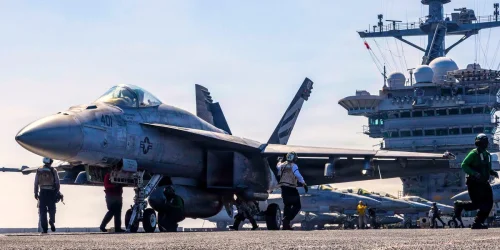
The United States is undertaking its most significant military reinforcement in the Middle East in over two decades, deploying a formidable array of naval and aerial assets to the region. This strategic build-up, the largest since 2003, comes as the Trump administration intensifies pressure on Iran to negotiate a deal limiting its nuclear and military capabilities.
At the core of the deployment are at least a dozen warships, whose collective value is estimated at approximately $50 billion. Satellite imagery has confirmed the presence of the US Navy's nuclear-powered aircraft carrier, the USS Abraham Lincoln, in the Arabian Sea.
Second Carrier Group En Route
A second carrier strike group, led by the newer USS Gerald R. Ford, is currently on its way to join the forces in the region. The deployment is not limited to naval power; it also encompasses a variety of advanced military aircraft and missile defence systems, significantly enhancing the US's defensive and offensive posture.
The scale of this mobilisation underscores the administration's commitment to a strategy of maximum pressure against Tehran. Military analysts suggest the visible show of force is designed to deter Iranian aggression and provide leverage in ongoing diplomatic efforts.
Historical Context and Strategic Aims
The 2003 invasion of Iraq marked the last time the US concentrated such a volume of military hardware in the Middle East. The current build-up reflects a renewed focus on state-based threats in the region, shifting from counter-insurgency operations that dominated the past two decades.
Box: Key Assets Deployed
- USS Abraham Lincoln (CVN-72): Nimitz-class aircraft carrier.
- USS Gerald R. Ford (CVN-78): Lead ship of the newest class of US carriers.
- Supporting vessels: Cruisers, destroyers, and support ships forming the carrier strike groups.
- Additional assets: Unspecified fighter aircraft, bombers, and missile defence batteries like Patriot and THAAD systems.
The immediate goal, as stated by administration officials, is to compel Iran back to negotiations for a comprehensive agreement. The long-term consequences of this military posture, however, remain a subject of intense debate among foreign policy experts, who warn of the risks of accidental escalation in the already volatile region.