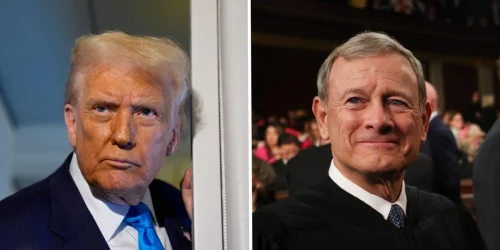
The United States Supreme Court has struck down a key element of President Donald Trump's tariff policy, imposing a new limit on the expansive presidential powers he has frequently invoked. The ruling, delivered on Friday, specifically targets tariffs justified under the International Emergency Economic Powers Act (IEEPA).
This decision represents a significant judicial check on executive authority in trade policy. The IEEPA, a law from the Carter era, grants presidents the power to regulate economic activity during declared national emergencies. The Trump administration had argued this included the authority to impose tariffs—a position never before taken by a president.
Business Challenges and Judicial Skepticism
The case reached the Supreme Court after two separate groups of businesses filed lawsuits challenging the legality of the tariffs. The court combined the cases and fast-tracked them, holding oral arguments at the start of its November term.
During these arguments, most justices expressed clear skepticism toward the government's position. Justice Neil Gorsuch, a Trump appointee, noted the historical significance of taxation powers. "The power to reach into the pockets of the American people is just different," Gorsuch stated. "And it's been different since the founding."
Lawyers for the business groups contended that Congress had been explicit about taxation and tariff powers in other legislation and would have been equally clear if IEEPA was intended to grant such authority to the president.
Impact on Trade Policy and Existing Tariffs
The court's ruling does not affect tariffs Trump has imposed using other legal authorities, and the president retains the power to issue additional tariffs under those statutes. However, the administration had favoured IEEPA due to its perceived flexibility.
Other laws allowing presidential tariffs without explicit Congressional approval come with limitations, including built-in expiration dates and caps on taxed amounts. They also make it more difficult to target specific countries rather than broad industries.
The decision comes as the US trade deficit shows signs of shrinking, largely attributed to the administration's tariff policies. Recent Commerce Department data indicated the deficit fell to $29.4 billion in October, its lowest level since 2009.
Legal Precedent and Future Implications
This ruling establishes a precedent that curtails the use of emergency economic powers for imposing broad-based tariffs, reaffirming Congressional authority over taxation. It directly impacts Trump's so-called "Liberation Day" tariffs, announced in April, which applied levies of at least 10% on imports from nearly every country.
Legal experts suggest the decision will force future administrations to rely more heavily on trade laws with clearer Congressional mandates and built-in oversight when enacting similar economic measures.