The United States Supreme Court has ruled that former President Donald Trump exceeded his authority by imposing sweeping tariffs on imported goods under a national emergency declaration. In a 6-3 decision, the court found the tariffs were not a lawful use of the International Emergency Economic Powers Act (IEEPA).
The ruling centres on tariffs imposed during Trump's presidency, which were justified as a response to a national emergency concerning trade imbalances. The majority opinion, authored by Chief Justice John Roberts, held that the power to "regulate" imports under IEEPA does not inherently include the power to levy tariffs.
Dissenting Justices Argue for Presidential Authority
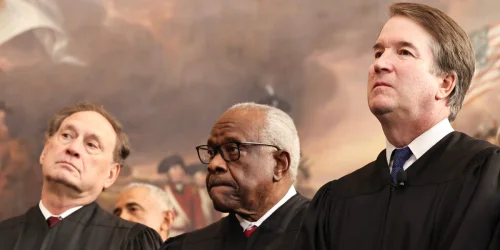
Three conservative justices—Brett Kavanaugh, Clarence Thomas, and Samuel Alito—dissented, arguing the tariffs were "clearly lawful." In a written dissent, Justice Kavanaugh stated, "The tariffs at issue here may or may not be wise policy. But as a matter of text, history, and precedent, they are clearly lawful."
The dissenting justices contended that tariffs are a "traditional and common tool to regulate importation" and that interpreting IEEPA to exclude them "creates nonsensical textual and practical anomalies." They noted presidents have "commonly" imposed tariffs throughout American history.
Legal and Practical Fallout of the Ruling
A significant unresolved question is the fate of billions of dollars in tariffs already collected. The court's majority decision is silent on how these funds should be returned, a process Justice Kavanaugh predicted in his dissent "is likely to be a 'mess.'"
Kavanaugh further argued that reversing the tariffs might be futile, as "numerous other federal statutes authorize the president to impose tariffs and might justify most (if not all) of the tariffs at issue in this case."
Constitutional Question of Delegated Power
In a separate dissent, Justice Clarence Thomas addressed the constitutional dimension, arguing that Congress can delegate tariff-setting authority to the president. "Historical practice and precedent confirm that Congress can delegate the power to impose duties on imports," Thomas wrote.
The dissents highlighted a two-fold disagreement with the majority: the legality of bypassing Congress on tariffs and the specific interpretation of the 1970s-era IEEPA law used to declare the emergency.
Implications for Future Trade Policy
The ruling sets a major precedent limiting a president's ability to unilaterally enact trade policy under emergency powers. It reinforces Congress's primary constitutional role in regulating commerce with foreign nations.
Legal experts anticipate the decision will trigger complex litigation and administrative procedures as businesses seek refunds for tariffs paid under the now-invalidated policy, with the practical execution of refunds remaining a significant challenge.