The US Supreme Court has ruled that tariffs imposed by former President Donald Trump under a national security act exceeded presidential authority. The Friday decision has prompted immediate calls from prominent Democratic governors for the federal government to issue refunds to American families for costs incurred.
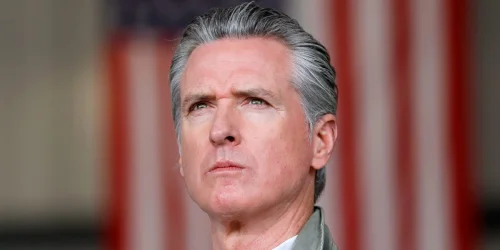
California Governor Gavin Newsom and Illinois Governor JB Pritzker, both considered potential 2028 presidential candidates, demanded the repayment of tariff costs following the court's judgement. They cited a recent congressional report estimating the average family paid $1,745 in such costs between February 2025 and January 2026.
Governors Invoice the White House
Governor Pritzker sent a formal letter and an invoice to Trump, demanding a $1,700 refund for every family in Illinois. The invoice, marked "PAST DUE - DELINQUENT," totalled more than $8.6 billion for over 5.1 million families. "Your tariff taxes wreaked havoc on farmers, enraged our allies, and sent grocery store prices through the roof," Pritzker stated.
Echoing the demand, Governor Newsom said, "Donald Trump should return that money immediately. He has an obligation... He took hundreds of billions of dollars from working folks." The White House responded critically to Pritzker's demand, with spokesman Kush Desai suggesting the governor focus on his own state's economic issues "instead of chasing another stupid headline."
Basis in Economic Analysis
The governors' $1,700 figure is based on a report released this month by Democrats on the Joint Economic Committee in Congress. The analysis found American consumers paid over $231 billion in tariff costs during the specified period. This aligns with studies from institutions like Harvard Business School and Yale's Budget Lab, which concluded such costs are largely borne by US businesses and consumers, not foreign entities.
Box: The IEEPA The International Emergency Economic Powers Act is a US law granting the president authority to regulate commerce during a declared national emergency. The Supreme Court ruled Trump's use of it for tariffs was an overreach of this authority.
Uncertain Path to Repayment
Despite the political demands, the mechanism for any potential refunds remains highly uncertain. The Supreme Court's ruling did not address the issue of repayments. When asked if refunds would now be necessary, Trump said, "I guess it has to get litigated for the next two years."
Treasury Secretary Scott Bessent stated it was "unlikely" Americans would receive tariff refunds, predicting the matter "could be dragged out for weeks, months, years." The ruling opens the possibility for American businesses to seek reimbursement for paid tariffs through legal channels, though no process has been established.
Background and Contradictory Promises
The controversy follows Trump's own previous suggestions regarding tariff revenue. In November, he floated the idea of sending "$2,000 tariff dividend checks" to middle and low-income Americans, a move that would have likely required Congressional approval. By January, his administration was giving mixed messages about such rebate plans.
Trump denounced the Supreme Court's decision and vowed to pursue additional tariffs through other legal avenues, signalling the political and legal battle over trade policy is set to continue.