Waymo's expanding robotaxi service is facing new operational challenges as its vehicles become paralysed in various situations, requiring intervention from public emergency services. The issue highlights a growing tension between autonomous vehicle companies and municipal authorities as driverless services scale.
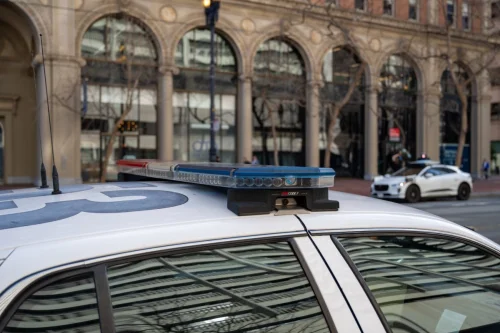
Senior reporter Sean O'Kane's investigation identified at least six incidents where police or firefighters had to manually drive stuck Waymo vehicles. In a critical incident in Austin this month, an officer responding to a mass shooting was first diverted to move a robotaxi obstructing the emergency response.
System Reliance on Public Resources
While Waymo maintains its own 24/7 roadside assistance team, the investigation's core finding is that the company ultimately relies on taxpayer-funded public services to physically recover its vehicles when they become immobilised. "At its core, Sean found that when Waymo’s vehicles get stuck, the company relies on taxpayer-funded public services to move its vehicles for it," the TechCrunch report states.
This dependency is drawing political scrutiny. San Francisco District 4 supervisor Alan Wong stated in a recent hearing that many officials agree "our first responders should not be AAA." The debate centres on whether this use of public resources is an acceptable growing pain or an unfair burden.
A Scaling Industry-Wide Challenge
The problem is not isolated to Waymo. The autonomous vehicle industry is poised for significant growth in 2025, with companies including Motional, Zoox, and Tesla planning paid robotaxi deployments. Each company's operational protocols will face similar tests.
Waymo currently provides 500,000 paid robotaxi rides weekly, a figure demonstrating rapid scaling but still minor compared to human-driven services like Uber and Lyft. This growth inevitably leads to more edge-case scenarios where vehicles cannot proceed.
Operational Realities and Response Times
An industry insider close to Uber, which partners with Waymo in some cities, revealed that Waymo journeys can take up to 30% longer than human-driven trips. This is attributed to the vehicles' defensive programming and tendency to avoid complex manoeuvres like unprotected left turns to minimise risk.
The December 2023 blackout in California provided a stark example of systemic vulnerability, paralysing multiple robotaxis simultaneously and testing the limits of any company's recovery response system.
Regulatory and Future Implications
The reliance on first responders is likely to become a focal point for city regulators as they draft frameworks for autonomous vehicle deployment. Utah has already taken legislative action, signing a bill that establishes a liability framework for AVs.
With more companies entering public roads—Zoox recently began testing its purpose-built robotaxis in Austin and Miami—municipalities will need to clarify recovery responsibilities and potential cost-recovery mechanisms to avoid straining public safety budgets.