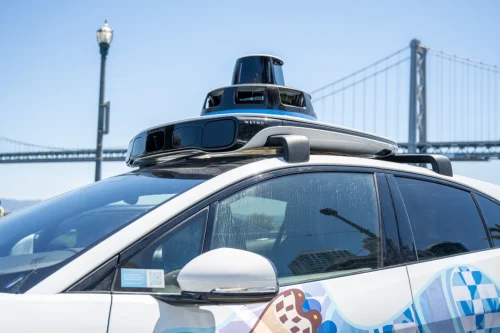
Waymo, the autonomous vehicle company owned by Alphabet, announced on Wednesday that it will begin testing its robotaxi technology in Chicago and Charlotte. The move marks a significant expansion of its commercial operations, which now span ten US cities.
The company stated that starting immediately, it will conduct manual driving and mapping in the two new metropolitan areas. This initial phase is standard practice for Waymo to understand local road conditions, traffic patterns, and unique challenges before gradually introducing autonomous vehicles.
Strategic Expansion into Diverse Urban Landscapes
The selection of Chicago and Charlotte presents two distinct operational challenges. Charlotte, with its suburban layout and mild climate, is considered a more straightforward environment. In contrast, Chicago's dense urban complexity, heavy traffic, and harsh winter weather will provide a rigorous test for Waymo's autonomous driving system.
"Operating there successfully would strengthen Waymo’s case that its system is nationally scalable," the company's announcement suggested. The Chicago expansion also represents another attempt to establish a foothold in a northern US city after New York state dropped a proposal for commercial robotaxi pilots.
Funding and Global Ambitions
This expansion news follows closely on the heels of Waymo beginning commercial driverless operations in four new cities: Dallas, Houston, San Antonio, and Orlando. The company recently secured $16 billion in funding to fuel its international growth.
Beyond the two new American cities, Waymo is also actively testing or planning launches in Denver, London, and Washington, D.C. The funding is earmarked for scaling its technology and operations across these diverse international markets.
Standardised Rollout Methodology
Waymo's approach to new cities involves a multi-stage process. It begins with months of manual driving for detailed mapping and data collection. This is followed by a period of supervised autonomous testing before the eventual launch of fully driverless, commercial passenger services.
The company did not provide a specific timeline for when driverless operations might begin in Chicago or Charlotte, noting that the initial phase is focused solely on laying the foundational groundwork with manual vehicles.