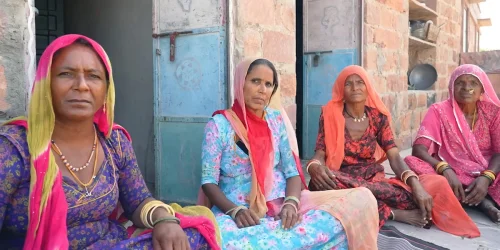
In a village of about 30 homes near Bhil-Basti in Rajasthan, at least 20 women are widows, their husbands killed by the incurable lung disease silicosis. Like Bimla, a widow in her late 20s, many now perform the same hazardous work—breaking sandstone—that claimed their spouses' lives, earning a fraction of the men's wages to pay off inherited debts.
The state of Rajasthan sits on more than 960 million tons of mineable sandstone, an industry that exported about $59 million worth of stone in 2024 and 2025 for use in global construction. Yet the workers shaping this luxury material live in poverty, with women like Bimla earning just 7,000 rupees (about $80) per month to support four children.
A Contemporary Form of Slavery
Activist Rana Sengupta, who heads the local NGO Mine Labour Protection Campaign, describes the situation as a modern form of slavery. "They can't complain, because they've taken out loans," he told Business Insider. "No one is tied in chains, but they cannot escape, either."
The system is perpetuated by quarry owners and moneylenders who provide loans for medical bills and funerals, trapping families in debt bondage. Bimla repays 3,000 rupees ($33) of her monthly income towards loans totalling over 100,000 rupees ($1,100), debt she inherited from her husband.
No Cure, No Escape
Silicosis is caused by inhaling fine silica dust from broken sandstone, scarring the lungs over time. A 2020 report states many sandstone miners in Rajasthan with the disease don't live past 40, with independent estimates suggesting over half of mine workers are afflicted.
The tragedy is multigenerational. Sapna, another widow from the same village, lost both her husband and her 20-year-old daughter to silicosis. "Breaking stone has ruined my life," Sapna said. She now has the disease herself but still works when able, earning about 300 rupees ($3) a day to service a debt to her quarry boss, who charges 70% interest.
Decades of Labour for Pennies
Radha Bai, in her 60s, began working at the quarry in 1983. Her husband died from silicosis a few years later. Four decades on, she still breaks stone, making about 30 tiles a day for 30 cents. "It hurts to be called a widow," she said. Illiteracy limits her options: "I know how to write half of my name... So what work can I do now?"
Despite the risks, parents see education as the only escape for their children. Bimla works to afford her children's schooling, while another worker, Navraji Ram, took out loans for the same purpose. "I will put all my efforts toward their education, but I won't let them work in the mining industry," he said.
Authorities Unresponsive
Business Insider's attempts to contact officials for comment on debt bondage and the lack of state aid for silicosis were met with silence. Calls to the Rajasthan State Labor Department were ended when questions were asked, and the number for the state's silicosis help desk was not in service. No responses were received via email to the Ministry of Mines or relevant labour departments.
The government provides some widows with 25 kilograms of grain monthly, but Bimla says it is insufficient. "I stay hungry myself, but I feed them: This is not a good life," she said, summarising the desperate choice between sustenance and survival faced by Rajasthan's quarry widows.