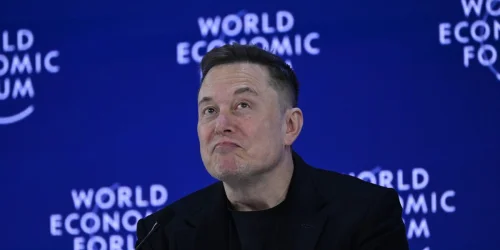
Elon Musk's artificial intelligence startup, xAI, is undergoing a significant restructuring and a merger with SpaceX, leading to the departure of at least ten key employees in recent days. The billionaire informed staff in a company-wide meeting on Tuesday that the reorganisation was necessary to "improve speed of execution," a move he said "unfortunately required parting ways with some people."
The departures include two of the company's original co-founders and several senior technical staff, marking the latest period of turbulence for the firm founded in 2023 to rival OpenAI and Google. The news coincides with Musk's announcement that xAI will merge with his aerospace company, SpaceX, to pursue ambitious plans for AI data centres in space.
Wave of Departures Hits Core Team
The exodus began on 9 February when co-founder Tony Wu, a former Google researcher who led xAI's reasoning efforts, announced his resignation on X. He was followed less than 48 hours later by co-founder Jimmy Ba, who oversaw AI tutoring. Their exits mean six of the 11 original co-founders have now left the company.
In the days that followed, at least eight other employees announced their departures. They include Hang Gao, who worked on the Grok Imagine video generator; Vahid Kazemi, a former OpenAI and Google engineer; Ayush Jaiswal, who worked on Grok; Shayan Salehian, who worked on the X timeline and Grok models; and Simon Zhai, a former Google DeepMind scientist.
Further departures included Andrew Ma, who rewrote X's user search algorithm; Radhakrishnan Venkataramani, who worked on reasoning systems for Grok; Rahul Ravishankar; and founding member Toby Pohlen, a former Google DeepMind staff research engineer whose last day was 26 February.
Merger with SpaceX and Orbital Ambitions
The staff changes come amid a major strategic shift. Musk stated that xAI is merging with SpaceX to create a joint entity focused on constructing a network of AI data centres in Earth's orbit. In the all-hands meeting, he outlined even grander visions, saying the combined company would aim to build a "self-sustaining" city and a catapult, or mass driver, on the moon to launch satellites housing these data centres into space.
This merger could provide a significant financial boost to xAI. SpaceX is reportedly preparing for a public offering later this year that could value the company at up to $1.5 trillion. This potential influx of capital would be timely for xAI, which reportedly burned through billions of dollars last year.
Context of Challenges and Controversy
The recent departures add to existing challenges for xAI. The startup has faced global backlash over sexually explicit deepfake images of real people generated by its AI chatbot, Grok, on the X platform. The company's aggressive growth and restructuring appear to be Musk's response to these pressures and his aim to accelerate development in the highly competitive AI sector.
Despite the exodus, Musk emphasised that xAI remains "hiring aggressively." The restructuring and merger signal a pivotal moment for the startup as it seeks to leverage SpaceX's engineering prowess and financial potential to realise Musk's vision of a space-based AI infrastructure, even as it contends with significant internal turnover.