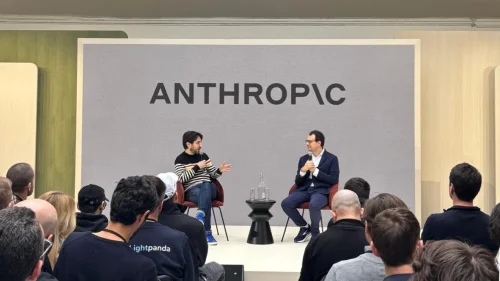
The artificial intelligence company Anthropic has announced it will not publicly release its newest, most advanced large language model, named 'Mythos'. The firm stated the decision was made because the model demonstrates an unprecedented capability to find and exploit security vulnerabilities in widely used software, posing a significant risk if made broadly available.
Instead of a general release, Anthropic will provide access to Mythos exclusively to a select group of large corporations and organisations that operate critical online infrastructure. This group reportedly includes entities such as Amazon Web Services and JPMorgan Chase. The stated rationale is to allow these major enterprises to identify and patch security flaws before malicious actors can leverage similar AI tools for cyberattacks.
Capabilities and Competitive Claims
Anthropic claims that Mythos significantly outperforms its previous top model, Opus, in discovering and exploiting software vulnerabilities. This advancement positions such frontier models as potential game-changers in cybersecurity defence and offence. However, the AI cybersecurity startup Aisle contested the uniqueness of this capability, stating its team replicated much of what Anthropic attributes to Mythos using smaller, open-weight models.
“The question I always have in my mind,” said Dan Lahav, CEO of the AI cybersecurity lab Irregular, in an interview with TechCrunch, “is did they find something that is exploitable in a very meaningful way, whether individually, or as part of a chain?” This highlights that the practical, exploitable threat of any discovered vulnerability is complex and situational.
Strategic Motives and the "Distillation" Debate
Analysts suggest the restricted release strategy may serve a dual purpose beyond security. By gating top-tier models like Mythos behind enterprise agreements, frontier labs can create a lucrative flywheel for major contracts while hindering competitors. A key technique used by rivals is "distillation," where powerful models are used to train new, cheaper LLMs.
“This is marketing cover for fact that top-end models are now gated by enterprise agreements and no longer available to small labs to distill,” suggested David Crawshaw, CEO of exe.dev, on social media. He argued this creates a "treadmill" that keeps enterprise dollars flowing to frontier labs by relegating distillation-focused companies to a secondary market position.
Industry-Wide Crackdown on Model Copying
This move aligns with a broader industry trend. Frontier labs, including Anthropic, Google, and OpenAI, have reportedly teamed up to identify and block attempts at model distillation, particularly citing efforts by Chinese firms. Anthropic has previously publicly revealed what it says are attempts by Chinese companies to copy its models. Blocking distillation protects the capital-intensive scaling advantage held by the largest AI companies.
Anthropic did not respond to questions about whether concerns over distillation influenced the Mythos release strategy. The company's approach presents a case study in balancing responsible innovation with commercial imperatives in the rapidly evolving AI landscape.