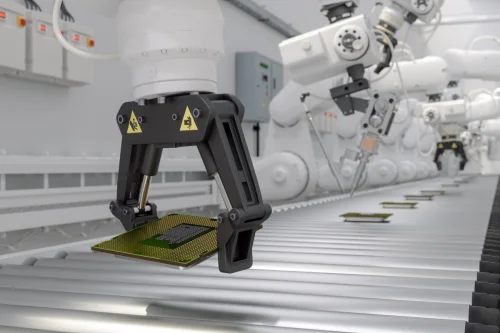
Venture capital firm Eclipse has closed on $1.3 billion in new capital to invest in the burgeoning field of "physical AI," where artificial intelligence meets the physical world. The Palo Alto-based investor will split the capital between a $591 million early-stage and incubation fund and a separate fund for more mature growth-stage startups.
Partner Jiten Behl described the move as a bet on the next major technological era, following waves like the internet and mobile cloud. "This is the first time where stuff is going to move from our screens into the physical world," Behl told TechCrunch, highlighting a focus on intelligence and action that solves real-world problems.
Building an interconnected portfolio
Eclipse's strategy involves creating a web of portfolio companies across overlapping physical sectors such as transportation, energy, infrastructure, compute, and defense. The firm believes fostering early partnerships between these startups is crucial for building scale and proof points. "Scale is so important, and if you can put it together in a way where companies partner early on... it just then enables them to go after the next set of demand," Behl explained.
The firm's recent investments signal this direction, including deals with electric boat maker Arc, battery recycler Redwood Materials, autonomous construction vehicle startup Bedrock Robotics, AV tech company Wayve, and industrial robotics lab Mind Robotics.
From funding to founding
A key part of the new fund's mandate is to actively incubate and build companies from the ground up within Eclipse. Behl confirmed the process has already begun, stating, "We're definitely working on a couple of really cool ideas." The firm is particularly interested in startups that operate across enterprise sectors.
The overarching thesis, according to Behl, is to connect these physical sectors, build scale across them, and leverage the data generated to train smarter AI models. "How do you use the data across sectors to build that moat?" he posed, suggesting this interconnected data advantage will benefit the broader portfolio.
Eclipse's median deal size has grown significantly in recent years, reflecting its increased commitment to capital-intensive physical world technologies. The firm now positions itself with a "nice war chest" to support companies throughout their lifecycle in this new technological era, which it sees as driven by talent, technology, demand, policy, and capital.