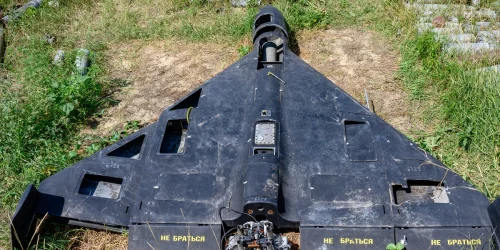
Exclusive photographs and analysis of weapon wreckage have provided new insight into Iran's military campaign against targets in northern Iraq. WELT's Chief Correspondent, Ibrahim Naber, was granted access to a cache of damaged Iranian munitions used in strikes on the Kurdistan region's capital, Erbil.
The weapons were deployed during Iran's war with the United States and Israel, with the Erbil region alone suffering over 400 separate attacks. The examined wreckage includes the Zolfaghar ballistic missile and the Shahed drone, a model that has become a mainstay of Iran's arsenal in the conflict.
Weapons Cache Details Iran's Tactics
The Zolfaghar is a short-range, road-mobile ballistic missile capable of striking targets up to 700 kilometres away. Its presence in the wreckage indicates Iran's use of precision-guided, medium-range strike capabilities against Kurdish areas.
More prominently featured was the Shahed drone, a low-cost, long-range unmanned aerial vehicle often described as a "loitering munition" or "suicide drone." Its proliferation and use in the hundreds of attacks underscore its role as Iran's primary weapon for sustained bombardment campaigns.
Context of the Erbil Campaign
The strikes on the Kurdistan region are part of a broader regional confrontation. Iran has repeatedly targeted what it claims are Israeli "espionage centres" and opposition group bases within the semi-autonomous Kurdish area of Iraq.
The scale of the campaign—over 400 attacks on a single region—highlights the intensity of this front in the conflict and the consistent threat faced by civilian and military infrastructure in Erbil.
Implications for Regional Security
Military analysts note that the accessibility of such wreckage provides valuable intelligence on the technical specifications, failure points, and manufacturing origins of Iran's domestically produced weapons. This information is critical for developing future countermeasures.
The continued use of the Shahed drone, in particular, signals a strategic shift towards asymmetric warfare, using swarms of inexpensive drones to overwhelm traditional air defence systems, a tactic observed in other global conflicts.
The evidence documented by WELT's correspondent is expected to be scrutinised by international weapons experts and could influence ongoing diplomatic discussions regarding arms proliferation in the Middle East. The government of Iraq has repeatedly protested the violations of its sovereignty by such cross-border strikes.