FedEx Corporation, the $84 billion global logistics leader, has chosen a strategy of partnering with robotics companies rather than developing proprietary automation technology in-house. This approach, exemplified by a new multi-year deal with SoftBank-owned Berkshire Grey, aims to keep the Memphis-based firm competitive in the rapidly automating logistics sector.
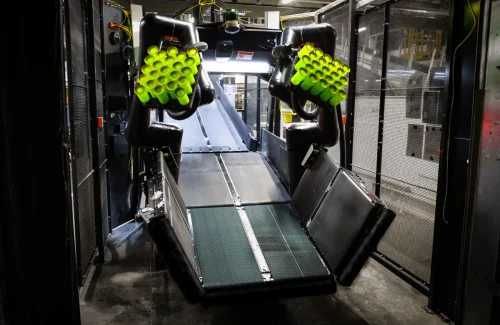
The partnership has yielded 'Scoop', a robot designed for the bulk unloading of parcels from delivery trucks—a task identified as one of the most physically demanding and unpredictable in FedEx warehouses. A pilot programme for these robots is scheduled to begin later this year, with potential for scaling across the network.
Targeting the toughest jobs first
According to FedEx executives, the decision to automate bulk unloading first was strategic. "There’s nothing that is off-the-shelf that we recognize will work for our needs," stated Stephanie Cook, Director of Advanced Technology and Innovation, Robotics. She noted the company had previously struggled to find a suitable solution and that developing 'Scoop' required a "multi-year journey" in collaboration with Berkshire Grey.
O.P. Skaaksrud, Vice President of Advanced Technology and Innovation, explained the technical rationale: bulk unloading, while requiring decision-making, is less complex than tasks like individual package picking. "Because we have such variety of package mix, to specialize individual picking, it’s just not gonna be fast enough," he said, highlighting the operational fit.
A broader partnership ecosystem
Berkshire Grey is not FedEx's only automation ally. Within its warehouses, the company also works with Dexterity, a robotics unicorn specialising in a "human-like" touch, and Nimble, which builds fully autonomous warehouse systems.
Beyond the warehouse, FedEx is exploring autonomous transport. An ongoing partnership with Aurora Innovation on self-driving trucking in Texas has completed over 3,200 autonomous loads since 2021. A previous last-mile delivery trial with Nuro concluded when that company shifted its business model in 2025.
Strategic calculation over hype
Despite the industry rush towards automation, FedEx emphasised a measured, business-led approach. "Don’t be too focused only on the technology, because then we’re going to fail," cautioned Skaaksrud. "This is really 3D chess... We are definitely doing what is required to not only have interesting technology, but interesting productive technology that’s going to solve business problems."
The company is not currently pursuing humanoid robots, citing the high complexity and orchestration challenges in dynamic warehouse environments. "The hype is just really high, but there’s a lot of potential there longterm," Skaaksrud acknowledged, stressing the need for "fit for purpose" solutions.
The ultimate goal, according to Cook, is to deploy technology that works alongside employees, making dangerous jobs safer and freeing workers for higher-skilled roles. FedEx's strategy suggests that in the race to automate, leveraging external expertise may provide a faster, more effective route than going it alone.